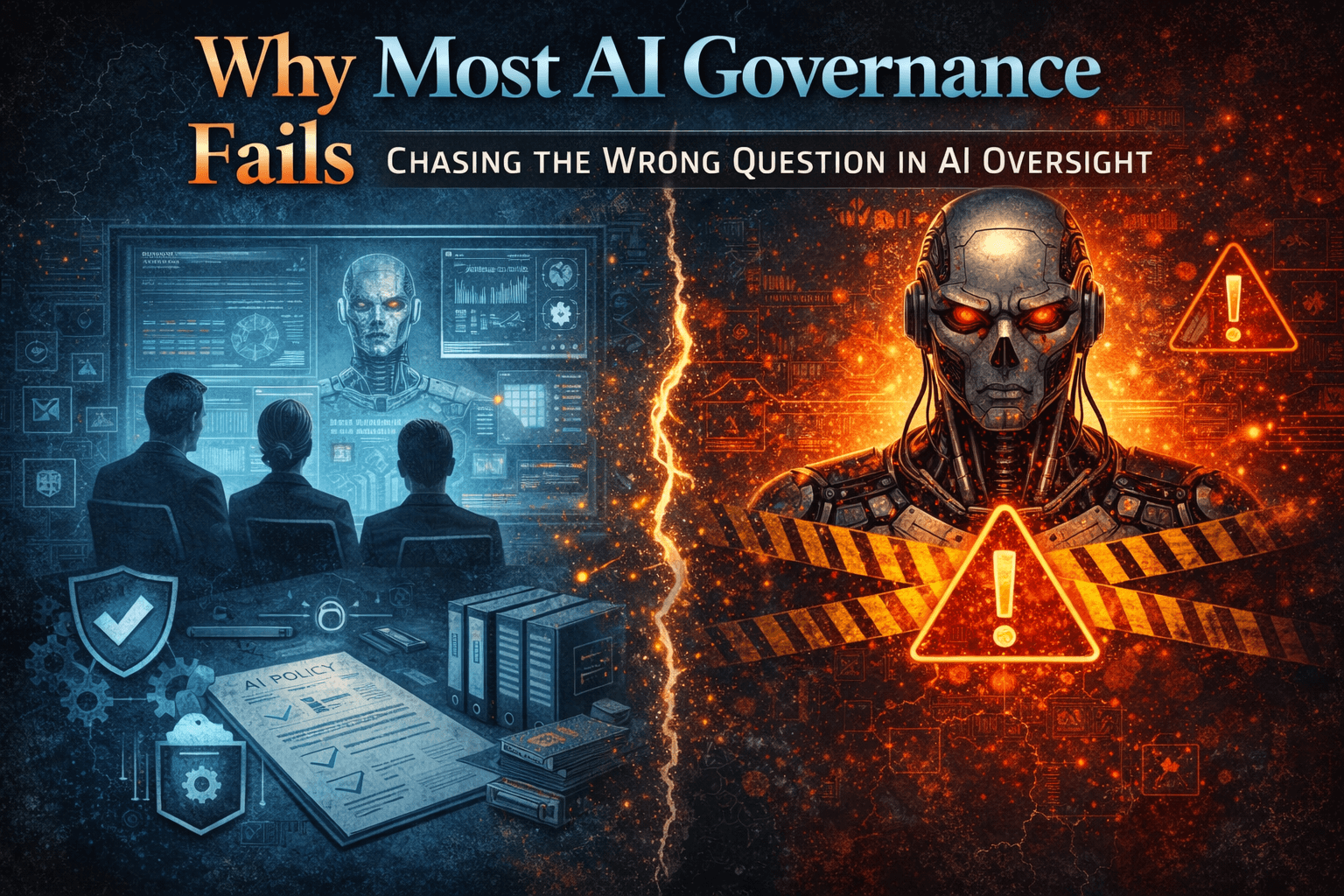
Organizations around the world are pouring resources into AI governance frameworks. They hire consultants, establish ethics committees, deploy bias detection tools, and produce impressive documentation. Yet when their AI systems harm stakeholders, when discriminatory patterns emerge, when trust erodes between organizations and the people they serve, these governance frameworks consistently fail to prevent the damage. The reason is not insufficient effort or inadequate technology. The reason is that most AI governance asks the wrong question entirely.
The prevailing paradigm treats AI governance as a control problem. How do we constrain AI behavior? How do we monitor AI decisions? How do we ensure AI systems operate within acceptable boundaries? These questions assume that AI is something like an autonomous agent that must be supervised, managed, and ultimately controlled. But this assumption fundamentally misunderstands what AI is and where the actual governance challenge lies.
The Control Paradigm and Its Failures
Control-based governance treats AI as if it were a powerful but potentially dangerous agent requiring oversight. Under this paradigm, governance professionals focus on constraining AI outputs, implementing safeguards against AI errors, and establishing monitoring systems to catch AI when it misbehaves. The language reveals the assumption: we speak of AI “making decisions,” AI “acting” on information, AI “learning” from data. We construct governance frameworks around the premise that AI does things that governance must prevent or correct.
This paradigm produces governance theater rather than substantive protection. Organizations implement bias testing protocols, but the tests address technical patterns rather than moral questions about whether AI deployment serves human flourishing. Organizations establish AI ethics committees, but these committees evaluate technical risks rather than examining how humans exercise moral judgment through AI systems. Organizations create documentation requirements, but the documentation describes AI behavior rather than human accountability. The entire apparatus of control-based governance can be satisfied while organizations systematically use AI to harm the people they serve.
Consider what happens when a hiring algorithm produces discriminatory outcomes. Under control-based governance, the response focuses on the algorithm. What training data caused this? What testing should have caught it? What technical fixes will prevent recurrence? These questions may reveal technical deficiencies, but they miss the ethical evaluation entirely. The right questions concern the humans who deployed the algorithm: Why did they choose to automate this decision? What accountability structures should have ensured human judgment remained present? How does this incident reveal systematic failures in how humans exercise authority through AI? Control-based governance treats symptoms while ignoring the disease.
AI Lacks Moral Agency
The fundamental error in control-based governance is treating AI as something that could, in principle, be ethical or unethical. AI cannot be either. AI lacks moral agency entirely. It cannot perceive moral dimensions of situations, cannot deliberate about what justice or fairness requires, cannot choose to act ethically or unethically. AI processes information according to patterns established by human designers. It executes functions. It produces outputs. But it does not act in the moral sense of the term.
This is not a limitation to be overcome through more sophisticated technology. No matter how intelligent AI becomes, intelligence alone does not create moral agency. An AI system can process vast amounts of data about ethical scenarios, can produce outputs that mimic moral reasoning, can even articulate ethical principles more precisely than most humans could. None of this makes the AI a moral agent. Moral agency requires the capacity to perceive that something matters, to deliberate about competing values, to choose a course of action for moral reasons, and to be genuinely responsible for that choice. AI processes; it does not perceive, deliberate, choose, or bear responsibility.
When we recognize that AI lacks moral agency, the governance question transforms. The question is never whether AI is behaving ethically. The question is always whether the humans who design, deploy, and govern AI are exercising their moral agency well or poorly. Are they making good choices about how to use AI? Are they building systems that serve human flourishing or systems that harm people? Are they maintaining accountability for outcomes AI produces? These are questions about human moral action, not about AI behavior.
From Controlling AI to Governing Human Decisions
Effective AI governance must reframe from controlling AI to governing human decisions about AI. This reframing changes what governance evaluates, what questions governance asks, and what outcomes governance produces. Instead of asking whether AI systems meet technical specifications, governance asks whether humans are exercising moral judgment appropriately when they deploy AI into roles affecting other humans. Instead of monitoring AI outputs for problematic patterns, governance evaluates whether accountability structures actually connect AI outcomes to humans who bear genuine responsibility. Instead of measuring compliance with procedural requirements, governance assesses whether AI deployment moves stakeholders toward flourishing or away from it.
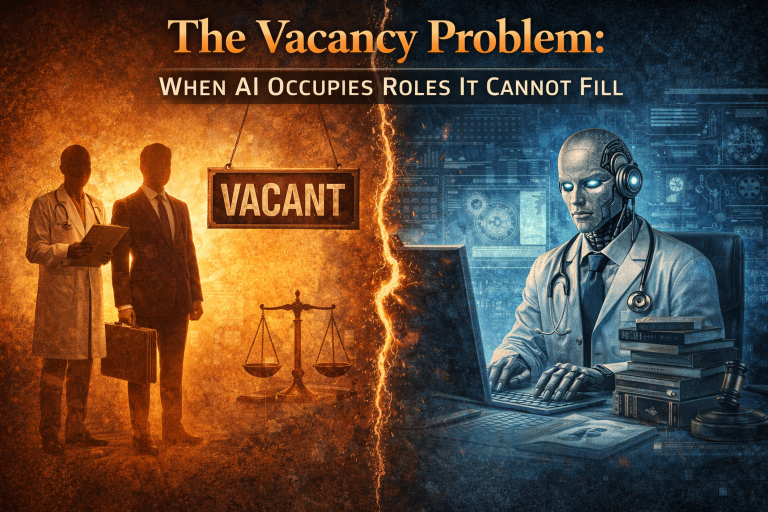
This reframing reveals what control-based governance obscures. When organizations place AI in positions where humans expect to encounter other humans exercising judgment and care, they create what we might call a vacancy problem. The position appears occupied because AI fills it functionally. But the position is vacant of moral presence. A human service representative can recognize distress, can judge that standard policy produces unfair outcomes in particular cases, can choose to help beyond what procedure requires. AI simulates these behaviors while being fundamentally incapable of them. Governance must address this vacancy, not by trying to make AI behave better, but by ensuring human moral agency remains present and accountable where it matters.
The Path Forward
Organizations that continue operating under control-based paradigms will continue producing governance that looks impressive but fails to protect stakeholders. They will satisfy compliance requirements while deploying AI in ways that systematically harm the relationships that matter most to their success. They will measure what is easy to measure while missing what actually matters. The governance apparatus will expand while stakeholder trust erodes.
The alternative requires intellectual honesty about what AI governance actually evaluates. AI governance does not govern AI. AI governance evaluates how humans exercise moral agency through AI systems. It asks whether the humans who architect, deploy, and oversee AI are making choices that serve human flourishing or choices that extract value from stakeholders, shift burdens onto vulnerable populations, and degrade the fabric of human relationships. These are moral questions about human action, not technical questions about AI behavior.
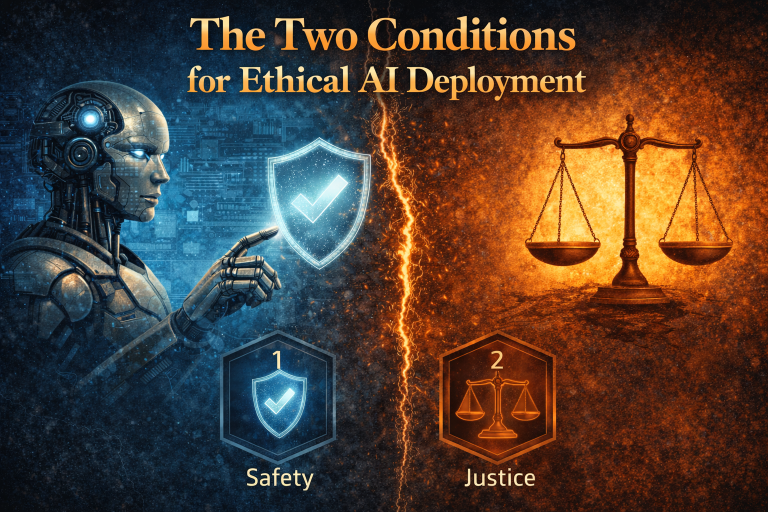
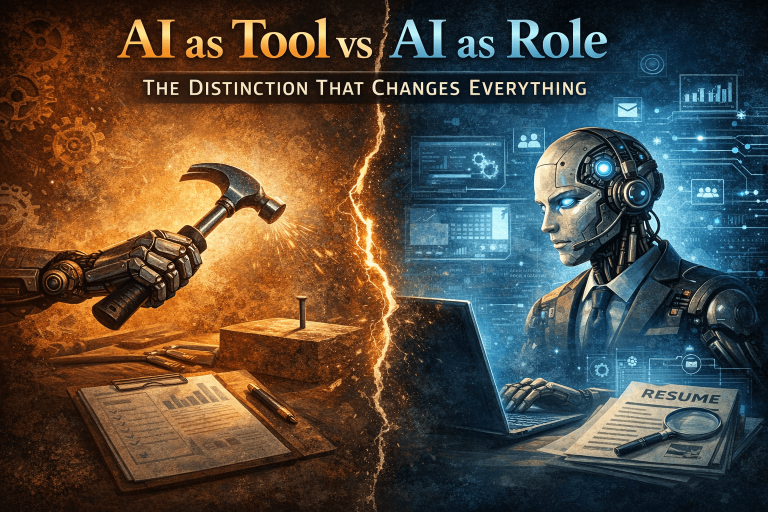
The blogs that follow in this series will develop a comprehensive framework for AI governance grounded in this recognition. We will examine the critical distinction between AI as tool and AI as role. We will explore why moral agency matters and why AI will never possess it. We will detail the specific conditions required for ethical AI deployment and the principles that guide assessment of whether those conditions are met. Throughout, the focus remains not on controlling AI but on ensuring that humans exercise their irreducible moral responsibility well.
Organizations ready to move beyond compliance theater toward authentic ethical practice will find that this reframing transforms not just governance processes but organizational culture itself. When governance evaluates human moral judgment rather than AI technical compliance, it creates pressure for genuine accountability rather than documentation. When governance asks whether AI deployment serves flourishing rather than whether it meets specifications, it creates space for conversations about purpose and values that compliance-focused governance suppresses. The goal is not merely better governance but better organizations serving stakeholders through AI deployed with wisdom, care, and genuine moral commitment.