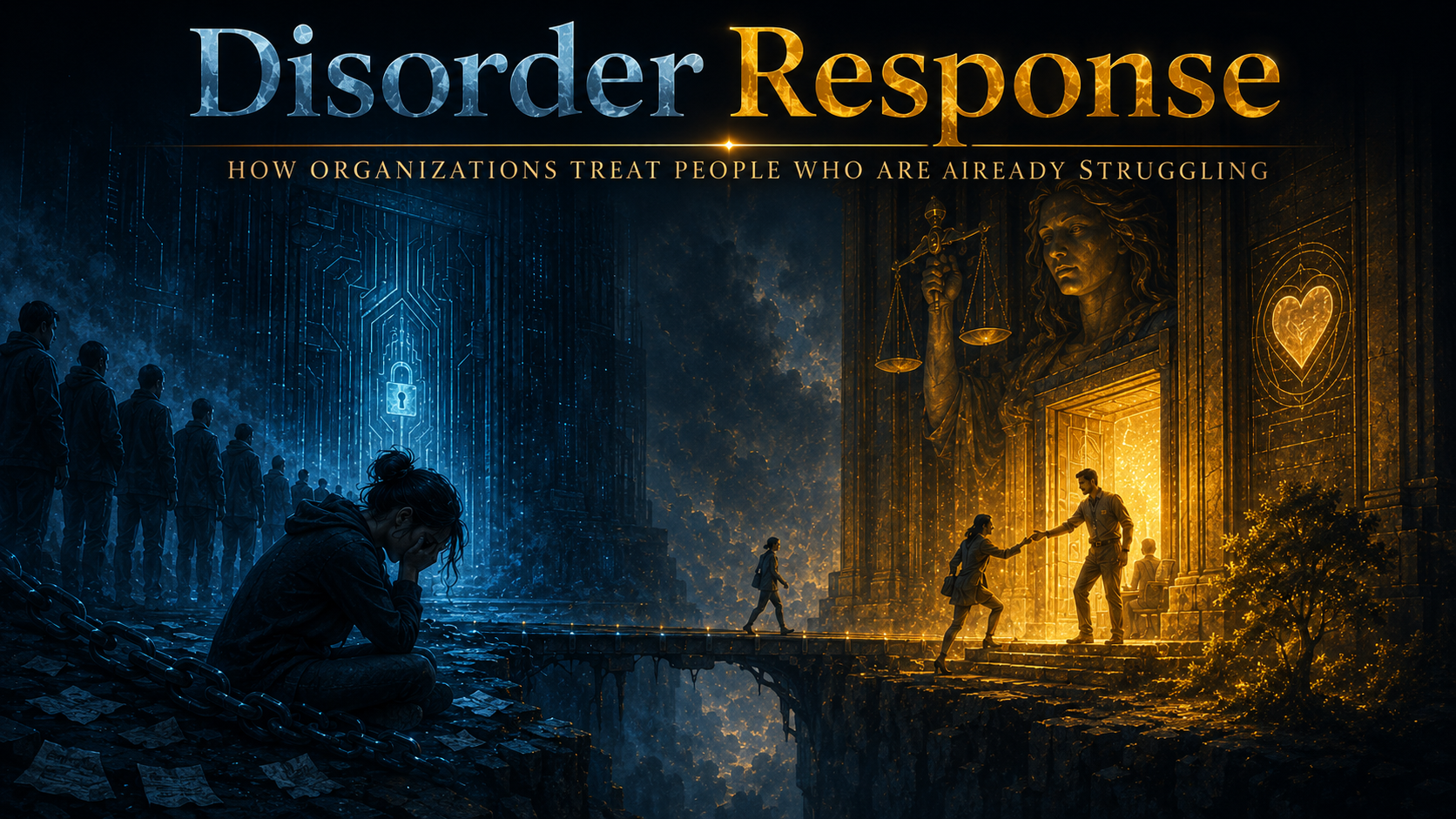
Every organization eventually encounters stakeholders in distress. The customer whose order went wrong. The patient whose treatment produced complications. The employee whose circumstances became difficult. These moments of disorder reveal organizational character more reliably than any carefully crafted interaction because they occur when stakeholders are already vulnerable and organizations face real costs to respond well.
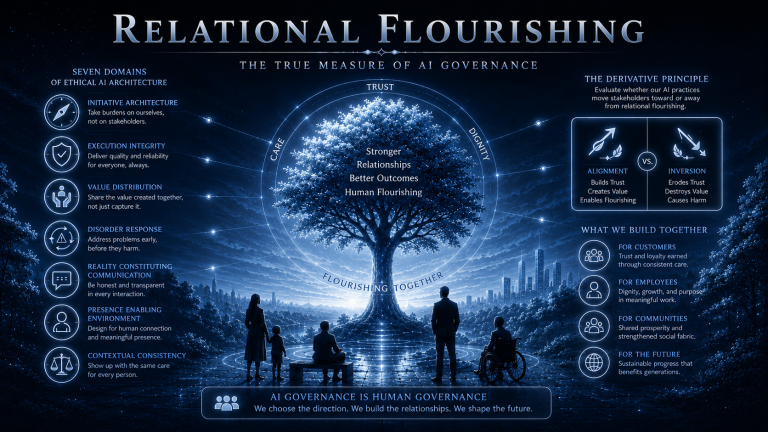
This fourth examination in the Seven Domains series addresses Disorder Response. The previous posts established that ethical AI moves toward stakeholder need with careful execution that shares generated value. Disorder Response adds a critical dimension: when things go wrong, does the organization’s response reduce stakeholder disorder or compound it?
The Moral Weight of Response
When stakeholders encounter disorder, they are already experiencing difficulty. Something has gone wrong. Plans have not worked. Expectations have been disappointed. They arrive at organizational systems not seeking routine service but seeking relief from problems they did not choose.
The organization’s response in these moments carries tremendous moral weight precisely because it occurs when stakeholders are least able to absorb additional burden. Adding friction to already difficult situations compounds harm. Reducing friction demonstrates care for people at their most vulnerable.
AI systems increasingly mediate disorder response. Customers seeking problem resolution encounter chatbots before agents. Patients seeking care navigation encounter automated systems before coordinators. These AI systems either facilitate genuine resolution or create additional barriers stakeholders experiencing disorder must overcome.
The Vacancy Problem becomes acute in disorder response. Problems often require judgment AI cannot provide. Exceptions require flexibility AI cannot authorize. Distress requires empathy AI cannot simulate authentically. When AI occupies disorder response roles without adequate human backup, stakeholders experiencing difficulty encounter systems that cannot actually help them.
Aligned Disorder Response
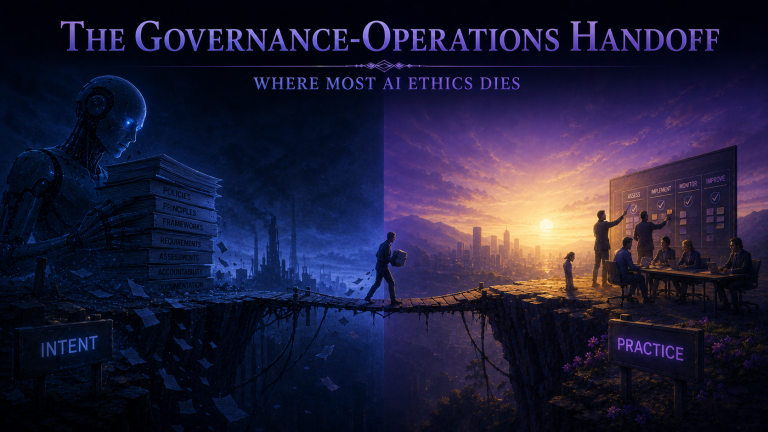
Organizations demonstrating aligned Disorder Response share recognizable characteristics. Their AI systems genuinely attempt to resolve problems rather than processing stakeholders through scripted flows. When AI cannot resolve issues, escalation to human judgment happens smoothly, with context preserved. Resolution is verified from the stakeholder’s perspective rather than declared from the organizational perspective.
Aligned organizations treat problem response as relationship investment rather than cost center. They recognize that stakeholders experiencing disorder form lasting impressions based on treatment in difficulty. They understand that genuine resolution, even when costly, builds relationship value exceeding resolution cost.
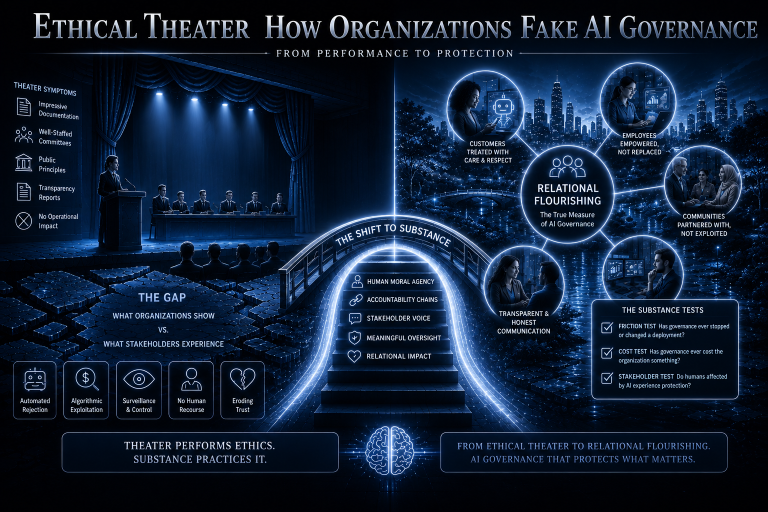
Inverted organizations add friction to already difficult situations. Their AI systems deflect rather than resolve, requiring stakeholders to navigate additional obstacles. Escalation pathways are obscured or eliminated. Resolution is declared when tickets close rather than verified when stakeholders confirm problems solved.
The Deflection Industry
A substantial portion of organizational AI deployment in disorder response serves deflection rather than resolution. The stated purpose is customer service. The operational purpose is cost containment through stakeholder attrition. Systems are designed so that stakeholders who give up represent success while stakeholders who persist represent failure.
This deflection architecture reveals itself in specific patterns. AI systems that loop through troubleshooting steps without detecting that steps have already been attempted. Hold times calibrated to cause abandonment. Escalation requests that are resisted, ignored, or routed to other AI systems. Resolution metrics tracking organizational perspective rather than stakeholder perspective.
The moral inversion is profound. Organizations celebrate their ability to exhaust people already experiencing difficulty. They measure success by how effectively they discourage stakeholders from obtaining resolution they need. They deploy sophisticated AI not to serve but to deflect.
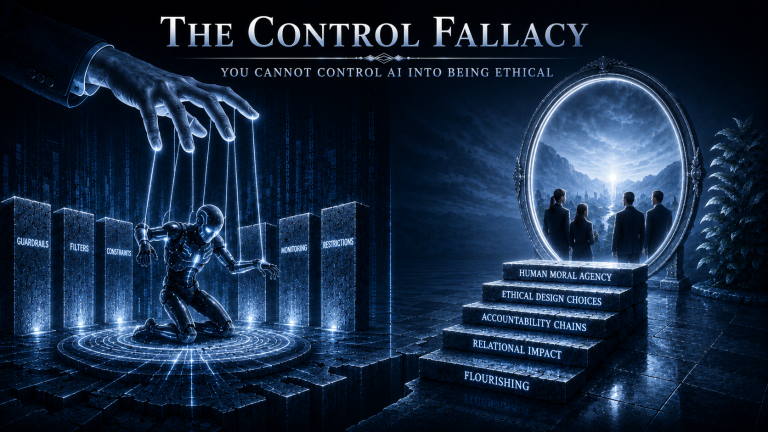
The Daisy Chain Principle applies forcefully. Humans chose to measure call deflection rather than problem resolution. Humans chose to make escalation difficult. Humans chose to declare resolution from organizational perspective rather than verify it from stakeholder perspective. Those humans bear moral accountability for the disorder they compound.
The Compounding of Harm
Inverted Disorder Response produces compounding harm extending beyond immediate interaction. Stakeholders who experience organizational friction during disorder learn to expect that friction. They approach future interactions defensively, anticipating that organizations will resist helping them.
This learned distrust represents relational damage persisting long after individual interactions conclude. The customer who fought for resolution on a billing error carries that experience to every future billing question. The patient who struggled to navigate care coordination carries that experience to every future health concern.
Organizations often fail to recognize this compounding because their metrics capture individual interactions rather than relationship trajectories. The disorder response that successfully deflected registers as victory even as it produces lasting damage.
The equity dimension intensifies this concern. Vulnerable populations, those with fewer resources to persist through friction, less familiarity with organizational navigation, experience disproportionate harm from inverted Disorder Response. The elderly customer gives up more easily. The working parent cannot afford the time investment securing proper response requires.
Toward Response That Honors Difficulty
Aligned Disorder Response requires fundamentally rethinking how organizations approach stakeholders experiencing problems. It requires recognizing that these stakeholders deserve more care rather than less, that their difficulty creates organizational obligation, that resolution cost is investment rather than waste.
Practical implementation begins with AI systems designed to resolve rather than deflect. This means training systems on actual problem resolution. It means creating escalation pathways that function smoothly. It means verifying resolution from stakeholder perspective.
But technology alone cannot create aligned Disorder Response. Organizational culture must value problem resolution as relationship investment. Performance metrics must capture stakeholder experience. Personnel must be empowered to exercise judgment. Leadership must communicate through resource allocation that disorder response matters.
The Derivative Principle asks whether AI moves stakeholders toward or away from flourishing. In Disorder Response, this becomes concrete: does the stakeholder experiencing difficulty emerge with their problem resolved and dignity intact, or do they emerge more burdened and more convinced that organizations do not care about struggling people?
The Integration of Domains
The previous posts examined Initiative Architecture, Execution Integrity, and Value Distribution. Disorder Response connects to all three. Organizations that move burden onto stakeholders through initiative design create disorder stakeholders then experience. Organizations that execute carelessly produce problems generating disorder. Organizations that capture all value while externalizing costs leave stakeholders without resources to absorb disorder.
The domains form integrated patterns of organizational ethics that either move toward stakeholder flourishing or away from it. An organization cannot claim aligned Disorder Response while its Initiative Architecture creates the problems stakeholders bring.
The next post examines Reality Constituting Communication, exploring how organizations handle truth in AI deployment. But communication connects to disorder response. Organizations that deceive stakeholders create disorder through false expectations. The pattern of honesty or deception shapes the disorder stakeholders experience.
Organizations reveal their character in how they treat people who are already struggling. Disorder Response asks whether organizations compound difficulty or relieve it.