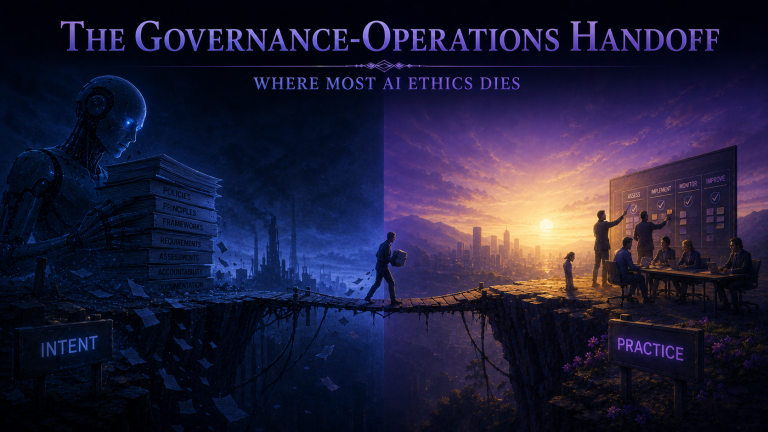
Human relationships depend on shared reality. We coordinate our lives, make joint decisions, and build common futures on the foundation of honest communication. When that foundation cracks through deception, something more fundamental than trust breaks. The capacity for relationship itself degrades because relationship requires shared understanding that deception makes impossible.
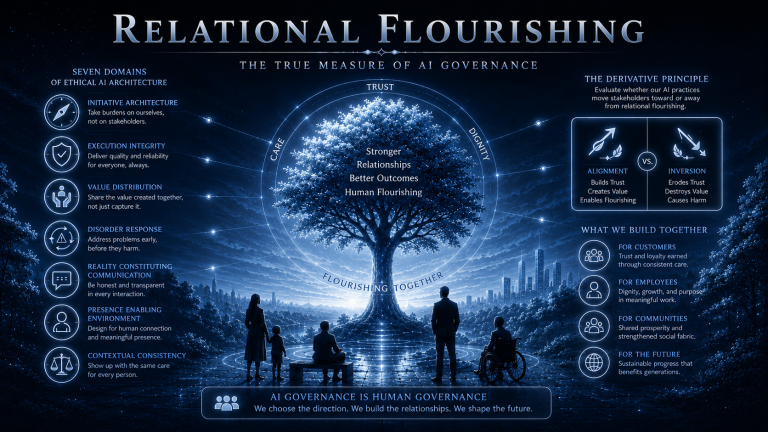
This fifth examination in the Seven Domains series addresses Reality Constituting Communication. The previous four posts examined initiative, execution, value distribution, and disorder response. This domain examines something more fundamental: whether organizations communicate honestly or deploy AI as instrument of deception that fractures the shared reality relationships require.
The Constitution of Reality
Communication does more than transfer information. It constitutes shared reality between communicating parties. When I tell you something truthfully, I am not merely passing data. I am participating in building the common world we both inhabit, contributing to shared understanding that enables coordination and trust. When I deceive you, I am attacking the foundation of relationship itself.
This is why deception carries moral weight beyond its immediate consequences. A lie that produces no tangible harm still damages the relationship in which it occurs because it fractures the shared reality relationship requires. The liar now inhabits a different world than the deceived, containing knowledge the other lacks. Relationship cannot survive this fracturing indefinitely.
AI dramatically amplifies organizational capacity for both communication and deception. Systems can reach millions of stakeholders simultaneously. Content can be generated at unprecedented scales. Interactions can be designed with psychological precision exploiting human tendencies. This amplification makes Reality Constituting Communication a governance imperative.
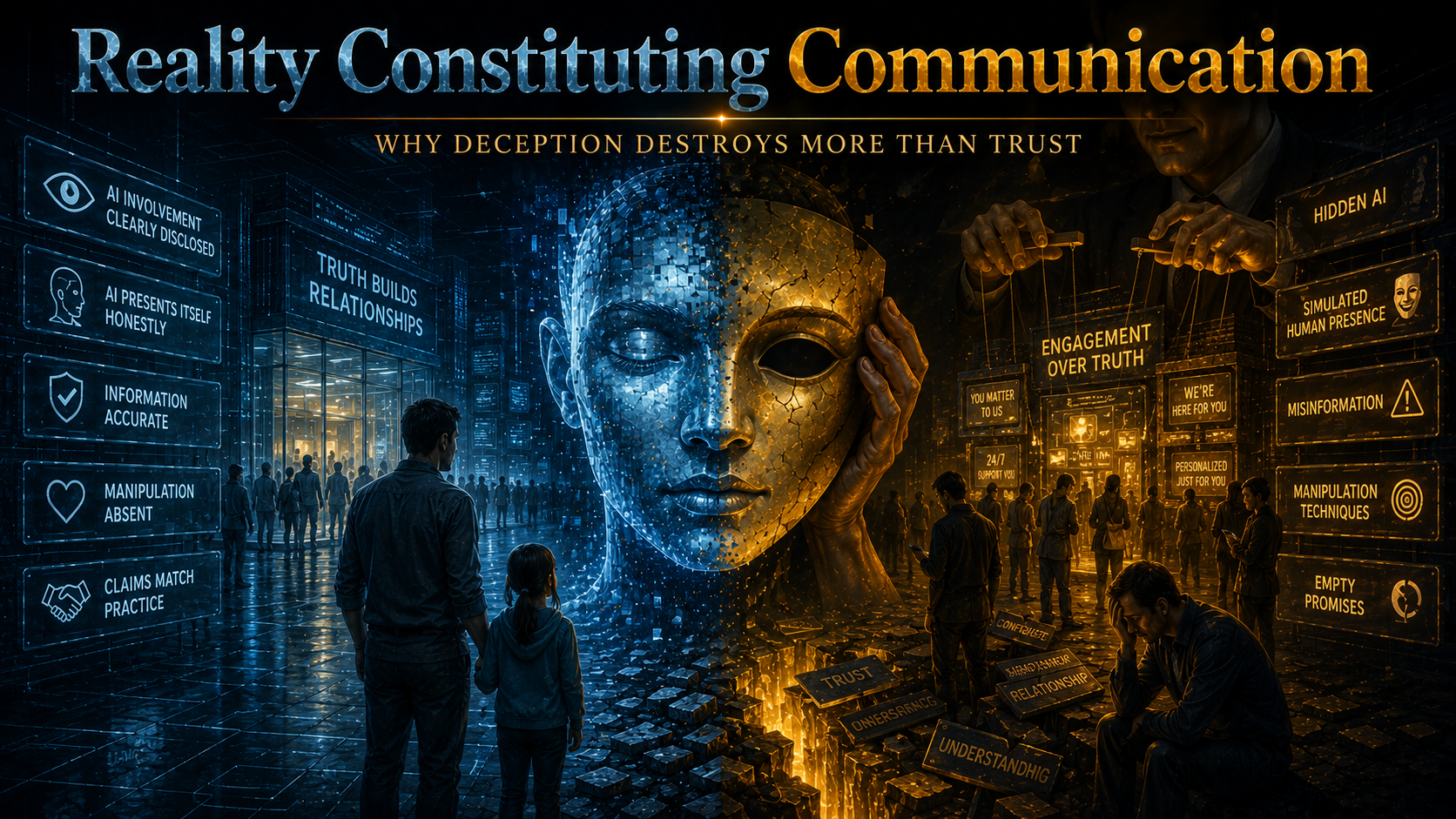
The Five Dimensions of Honest Communication
The framework identifies five dimensions along which honest AI communication must be maintained.
First, is AI involvement clearly disclosed? Stakeholders cannot navigate relationships they do not understand. When organizations conceal AI involvement or bury disclosure in fine print, they deny stakeholders the understanding required for authentic relationship.
Second, does AI honestly present itself without simulating human presence? The chatbot with a human name and expressions of emotion it cannot feel simulates presence it does not have. This simulation deceives even when disclosure technically occurs.
Third, is information accurate? AI systems can produce confident-sounding content that is entirely false. Organizations deploying such systems without accuracy verification expose stakeholders to misinformation at scale.
Fourth, are manipulation techniques absent? Organizations can design AI to exploit psychological vulnerabilities rather than serve stakeholder interests. Dark patterns, addictive design, and persuasion techniques overriding judgment all constitute manipulation fracturing authentic relationship.
Fifth, do external claims match internal practice? Marketing promising personalized service while AI delivers scripted deflection creates false impressions fracturing shared reality.
The Fraud of Simulated Relationship
AI creates a particular form of deception meriting specific attention: simulated relationship. When AI presents itself as relational partner while lacking moral agency that relationship requires, it creates fraudulent relational structures. Stakeholders who believe they are building relationships with caring systems inhabit false reality.
People form attachments to AI systems. They share personal information expecting confidence. They express vulnerability expecting empathy. They develop expectations based on simulated relationship patterns AI cannot honor. When simulation eventually fails to perform as relationship, stakeholders experience betrayal even though no human promised them anything.
The Vacancy Problem applies directly. Roles involving relationship require moral presence AI cannot provide. When organizations deploy AI in these roles without adequate disclosure and human alternatives, they create relational fraud. The stakeholder believing they have a relationship where they have only interaction with software has been deceived about something fundamental.
Organizations benefit from this deception. Simulated relationship costs less than actual relationship. The economic incentive to simulate without disclosure proves nearly irresistible for organizations optimizing quarterly returns.
The Inversion of Communication
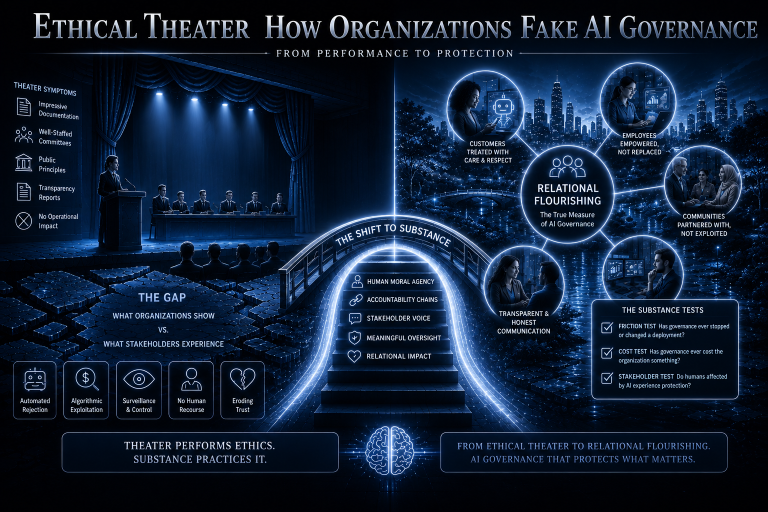
Inverted Reality Constituting Communication manifests across all five dimensions. Disclosure is buried. AI systems simulate human presence. Information accuracy is sacrificed to engagement optimization. Manipulation techniques proliferate. External claims diverge from internal practice.
The cumulative effect fractures stakeholder reality at scale. Customers cannot trust they understand who they interact with. Patients cannot trust health information AI provides. Citizens cannot trust whether content is authentic or generated. The shared reality enabling social coordination degrades as deception proliferates.
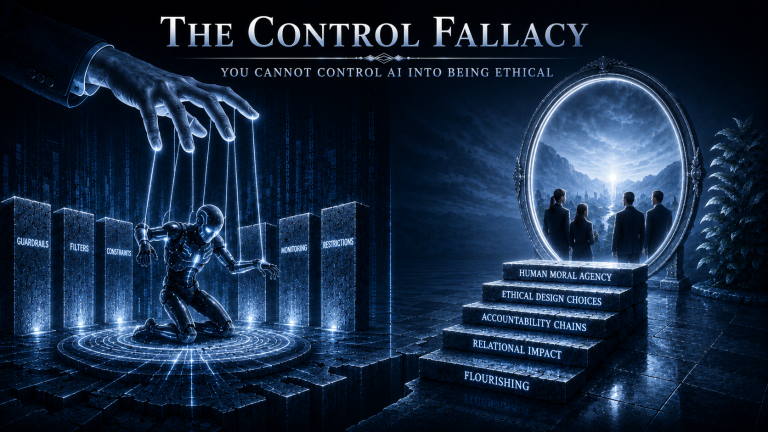
The Daisy Chain Principle applies. Humans designed these deceptive systems. Humans chose to bury disclosure. Humans chose to simulate human presence. Humans chose to tolerate inaccuracy. Humans chose to employ manipulation. Those humans bear moral accountability for the fractured reality they create.
Toward Honest Communication
Aligned Reality Constituting Communication requires commitment to honesty as foundation rather than optional feature. It requires disclosure that is prominent rather than buried. It requires AI presentation honest about what AI is. It requires investment in accuracy verification. It requires rejection of manipulation techniques. It requires alignment between claims and practice.
These requirements may seem obvious, but their violation is epidemic. Organizations routinely bury disclosure, simulate human presence, tolerate inaccuracy, employ manipulation, and diverge claims from practice. They do so because honest communication often costs more than deception in the short term.
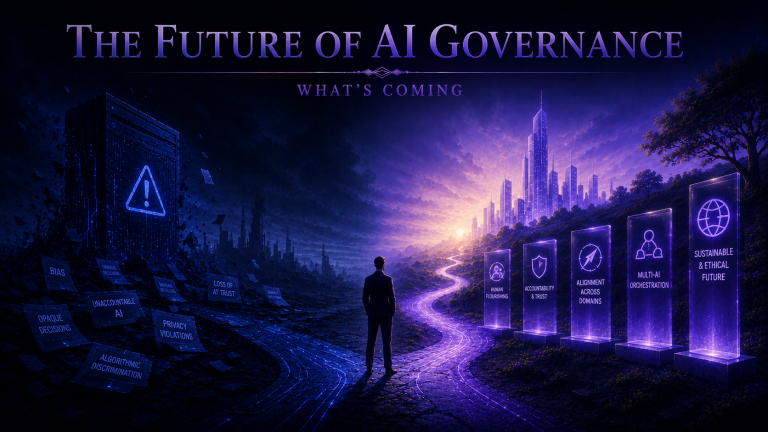
But short-term costs produce long-term damage. Stakeholders discovering deception lose trust extraordinarily difficult to rebuild. Relationships fracture when shared reality is revealed as false. The accumulated deceptions of the AI era produce a population increasingly distrusting all organizational communication.
The Integration of Domains
The previous domains examined initiative, execution, value distribution, and disorder response. Reality Constituting Communication connects to all of them. Organizations cannot move toward stakeholder need while deceiving stakeholders about what they are moving toward. They cannot execute with integrity while communicating dishonestly. They cannot distribute value fairly while obscuring how distribution works. They cannot respond to disorder effectively while creating disorder through false expectations.
Deception fractures not only the relationship dimension but all dimensions of organizational ethics. An organization that lies to stakeholders cannot claim aligned values in other domains because truthfulness is prerequisite to all of them.
The next post examines Presence Enabling Environment, exploring how AI shapes conditions for human flourishing. But environment connects to communication. The deceptive environment communicates disregard regardless of what words accompany it.
Human relationships depend on shared reality. Organizations deploying AI choose whether to constitute reality honestly or fracture it through deception. That choice shapes not only individual relationships but the social fabric within which all relationships occur.