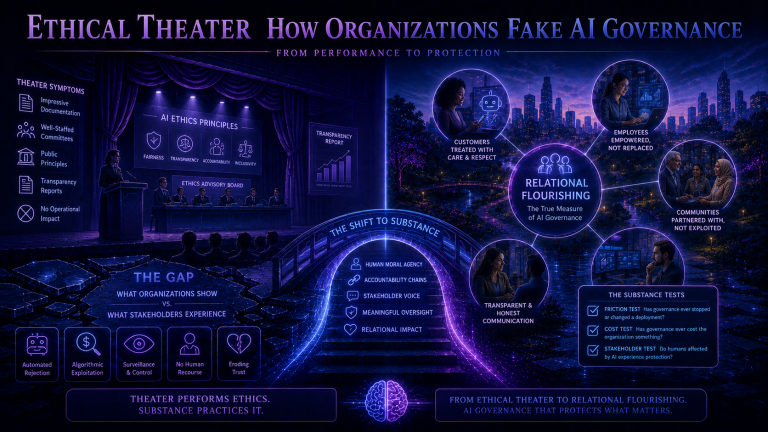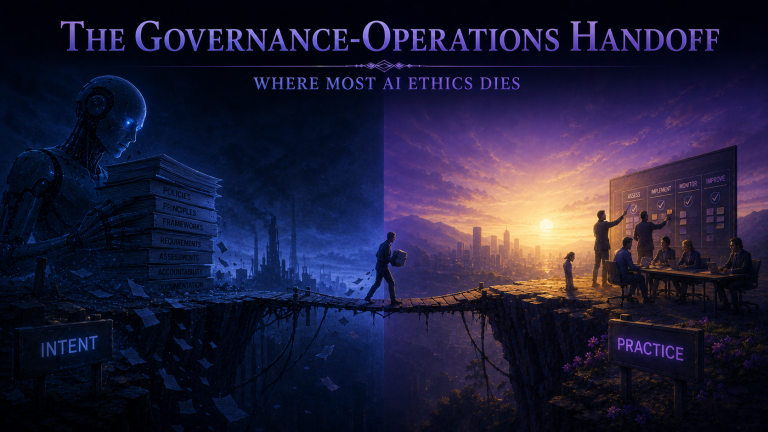
Everyone behaves well when watched. The true test of character is conduct when no one observes, when accountability is absent, when shortcuts would go unnoticed. Organizations face this test constantly. They can maintain ethical standards regardless of context, or they can perform ethics where visible while abandoning them where hidden. The choice reveals whether organizational ethics are genuine commitment or strategic positioning.
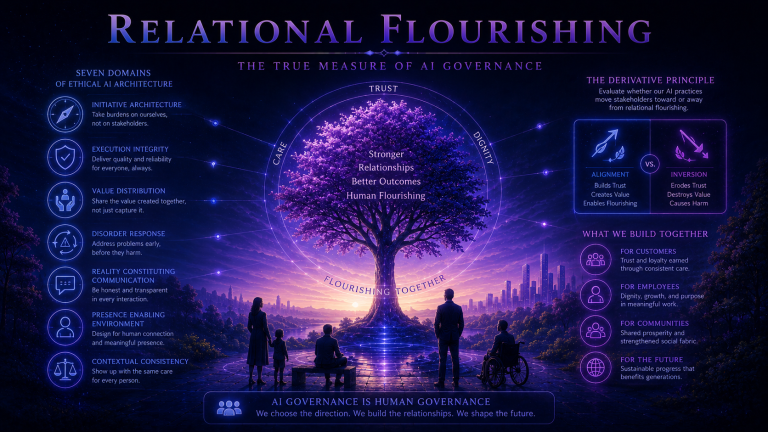
This final examination in the Seven Domains series addresses Contextual Consistency. The previous six posts explored initiative architecture, execution integrity, value distribution, disorder response, reality constituting communication, and presence enabling environment. This domain examines whether organizations maintain the same standards across all these dimensions regardless of who is watching, who is affected, and what pressures they face.
The Meaning of Consistency
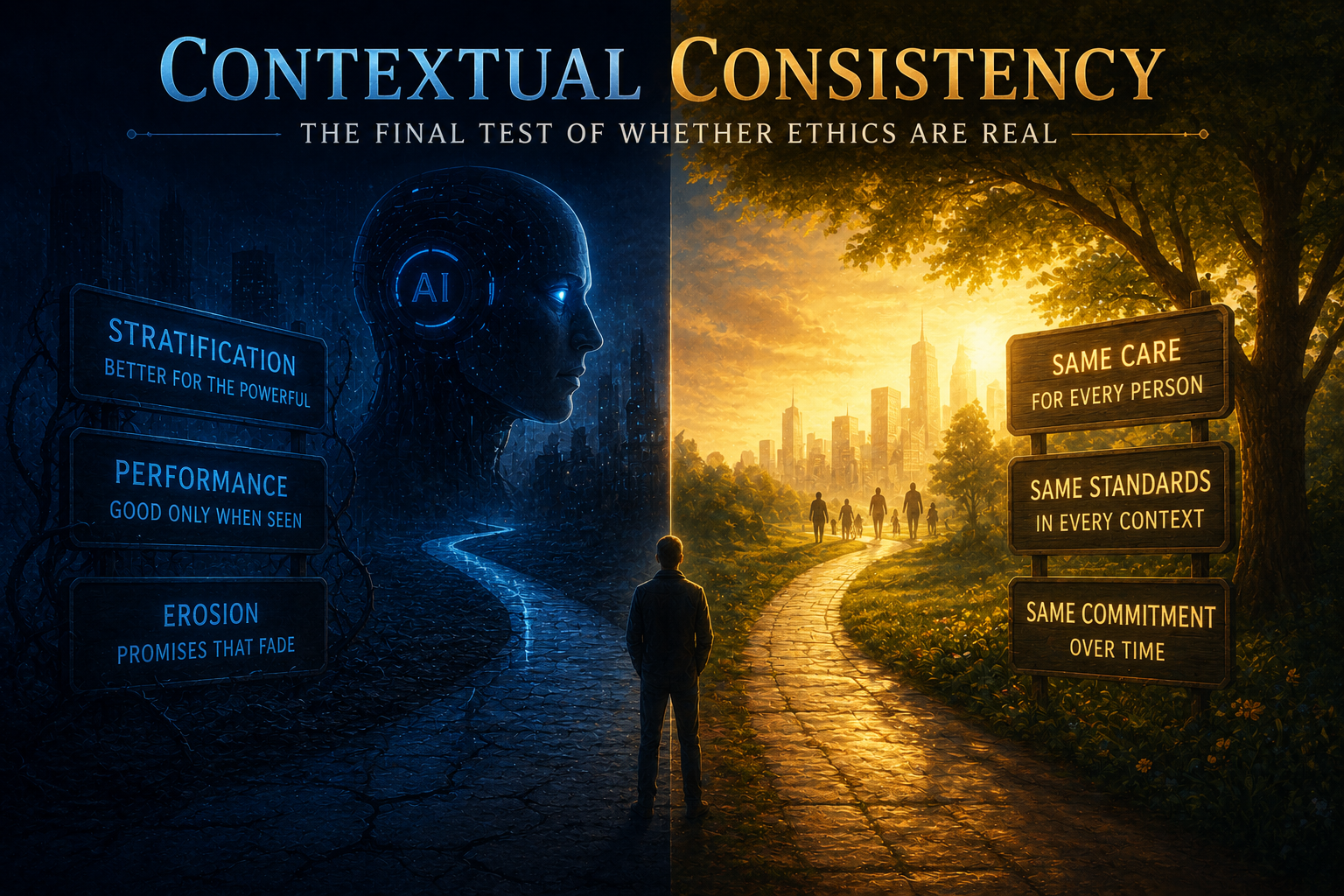
Contextual Consistency requires maintaining ethical standards across varying conditions. The organization demonstrates consistency when it treats stakeholders equivalently regardless of stakeholder power, maintains standards whether or not behavior is visible to oversight, and preserves commitments over time despite changing circumstances. The principle seems almost tautological: ethics require consistency because inconsistent ethics are not ethics at all.
Yet organizational practice routinely violates this principle. Companies provide exemplary service to customers who can harm them reputationally while degrading service to customers who cannot. They maintain high standards in visible operations while tolerating lower standards in hidden ones. They proclaim commitments during favorable periods and abandon them when circumstances change. This inconsistency reveals that stated ethics were always contingent, never genuine.
AI intensifies both the challenge and the revelation of contextual consistency. Organizations deploy AI across diverse contexts simultaneously, serve powerful and vulnerable stakeholders through the same systems, operate visible and hidden processes through connected infrastructure. The consistency or inconsistency of AI deployment practices reveals organizational values at unprecedented scale.
The Three Patterns of Inconsistency
The framework identifies three patterns exposing ethical inconsistency.
Stratification describes variation by stakeholder power. Organizations demonstrating stratification provide better treatment to powerful stakeholders while degrading treatment for vulnerable ones. The wealthy customer reaches a human immediately while the poor customer navigates endless automation. The influential complainant receives rapid resolution while the ordinary complainant experiences deflection.
Stratification reveals that organizational ethics operate as relationship management rather than ethical commitment. The organization does not believe all stakeholders deserve good treatment. It believes powerful stakeholders can harm it and vulnerable stakeholders cannot. Its ethics are defensive positioning, not genuine care.
Performance describes variation by visibility. Organizations demonstrating performance maintain high standards for visible AI while tolerating low standards for hidden AI. The customer-facing chatbot receives careful design while the internal screening algorithm operates carelessly. The public-facing content generation maintains accuracy while invisible data processing tolerates errors.
Performance reveals that organizational ethics operate as reputation management rather than ethical commitment. The organization does not believe ethical standards matter intrinsically. It believes visible ethics generate reputational benefit while hidden ethics generate operational cost. Its ethics are marketing, not genuine.
Erosion describes variation over time. Organizations demonstrating erosion maintain commitments during favorable conditions while abandoning them under pressure. The standards proclaimed during launch degrade during operation. The ethics announced during growth disappear during contraction.
Erosion reveals that organizational ethics operate as convenience rather than commitment. The organization does not believe its stated ethics bind it. It believes commitments persist while easy and disappear when hard. Its ethics are performance continuing only while costless.
The AI Amplification of Inconsistency
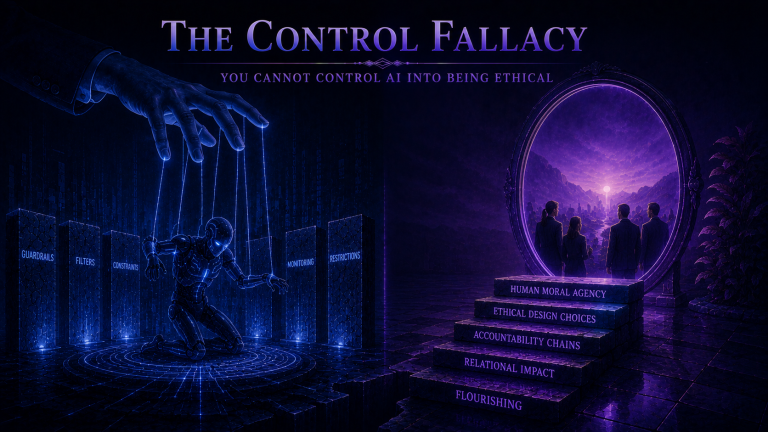
AI amplifies contextual inconsistency because AI enables precise calibration of treatment by context. Organizations can program systems to provide different service levels based on customer value scores. They can automate screening applying different standards based on applicant characteristics. They can design processes optimizing differently depending on whose interests are at stake.
The traditional barriers to stratification, human employees who might resist treating people differently, disappear when AI handles interactions. The traditional costs of performance decrease when AI can implement variation through parameter changes. The traditional accountability for erosion fades when AI lacks institutional memory.
The Daisy Chain Principle applies directly. These inconsistencies do not emerge spontaneously. Humans designed systems that stratify service by stakeholder power. Humans chose to maintain different standards for visible and hidden operations. Humans allowed commitments to erode. The AI implements human choices, and humans bear accountability for the inconsistencies those choices produce.
The Revelation of Reality
Contextual Consistency serves as meta-domain because it reveals whether alignment in other domains is real or performed. An organization claiming aligned Initiative Architecture while stratifying service contradicts itself. An organization claiming aligned Execution Integrity while tolerating quality gaps in hidden operations contradicts itself. An organization claiming aligned Value Distribution while eroding commitments under pressure contradicts itself.
The revelation is uncomfortable precisely because it is comprehensive. Organizations cannot maintain that they operate ethically while demonstrating systematic contextual inconsistency. Either their ethics apply across contexts or those ethics are not actually commitments.
This is why Contextual Consistency serves as final domain. It tests whether the previous six domains represent genuine organizational commitment or governance theater.
Toward Genuine Consistency
Aligned Contextual Consistency requires organizational willingness to maintain standards that are genuinely universal. It requires treating vulnerable stakeholders with the same care as powerful ones. It requires maintaining quality standards whether or not behavior is observed. It requires preserving commitments despite changing circumstances.
Practical implementation begins with recognition that consistency costs something. Treating all stakeholders well costs more than treating only powerful ones well. Maintaining standards in hidden operations costs more than tolerating degradation. Honoring commitments under pressure costs more than abandoning them. Organizations claiming they cannot afford consistency are revealing that their ethics were always budgeted.
Assessment requires examination across stakeholder populations, visibility conditions, and time periods. Do quality metrics vary by stakeholder characteristics revealing stratification? Do standards differ between visible and hidden operations revealing performance? Do commitments from previous periods remain honored or have they eroded?
The Integration of Domains
The Seven Domains form integrated framework because ethical organizational practice requires integrated commitment. Initiative Architecture establishes whether organizations move toward stakeholder need. Execution Integrity establishes whether that movement is careful and competent. Value Distribution establishes whether generated value is shared. Disorder Response establishes whether organizations care for stakeholders in difficulty. Reality Constituting Communication establishes whether organizations maintain honesty. Presence Enabling Environment establishes whether organizations create conditions for flourishing.
Contextual Consistency tests whether all of these commitments are real. Organizations maintaining consistency across stakeholder power, visibility conditions, and time demonstrate genuine alignment. Organizations demonstrating inconsistency reveal that their alignment was always contingent.
This concludes our Seven Domains series. The domains provide comprehensive framework for evaluating whether AI deployments move toward human flourishing or away from it. But the framework serves no purpose if organizations treat it as checklist for governance theater rather than genuine commitment to stakeholder flourishing.
The final test is always consistency. Organizations that behave differently based on who is watching, who is affected, and what pressures they face reveal that their ethics were never ethics at all.
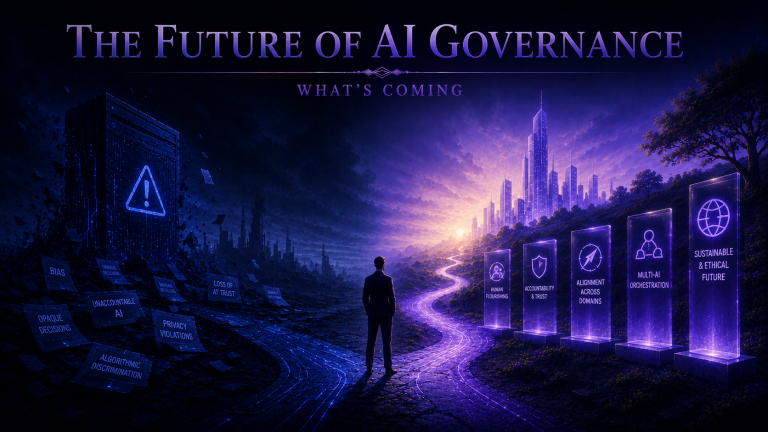
AI governance asks fundamental questions about human authority and accountability. The Seven Domains structure those questions across dimensions that matter for human flourishing. Contextual Consistency asks whether organizations will answer those questions honestly across all the contexts where answers matter.
The choice between genuine ethics and governance theater is made in every context, especially the hidden ones.