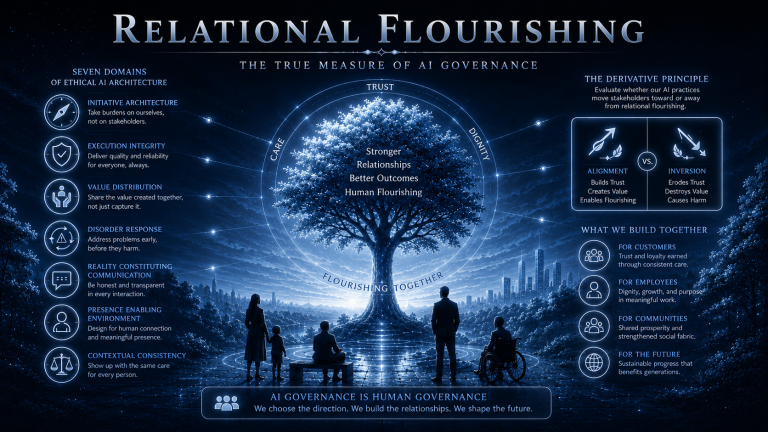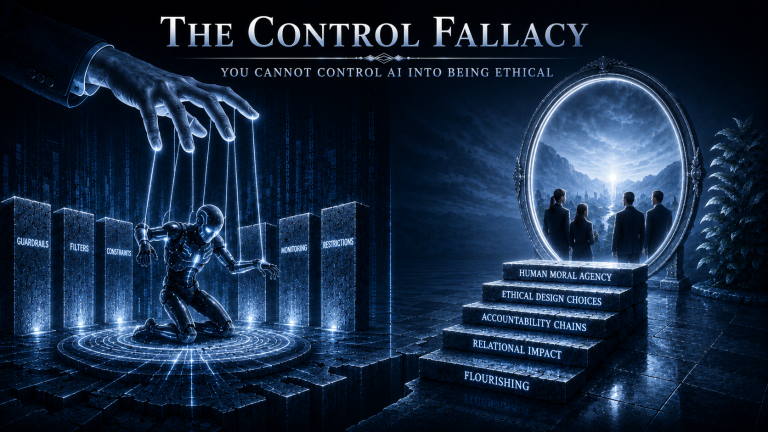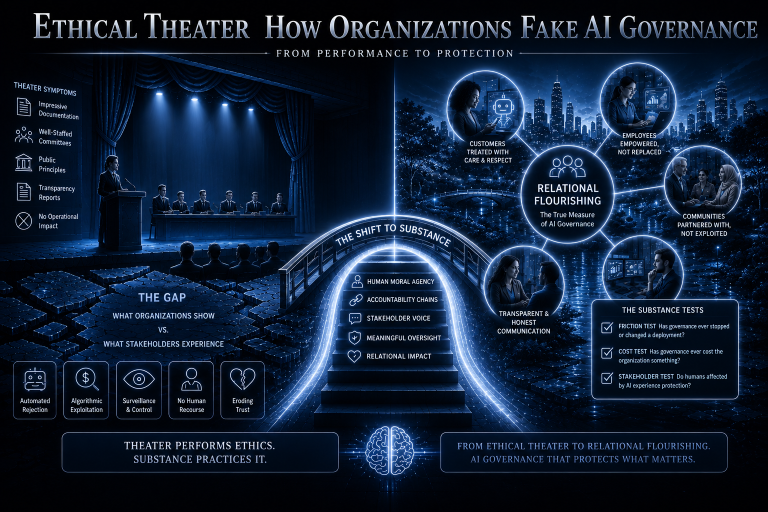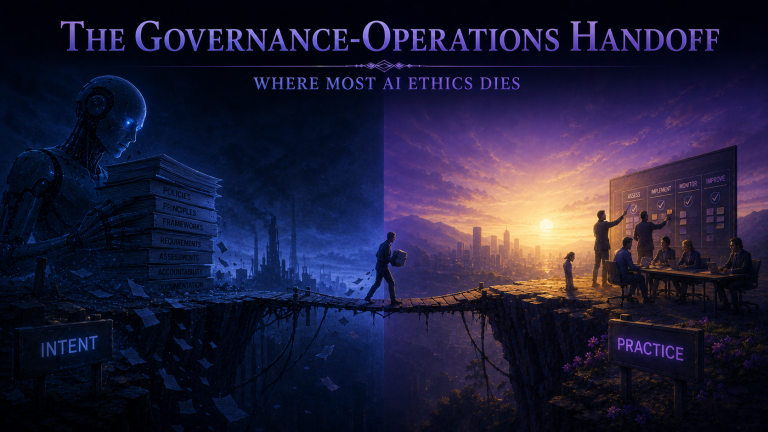

The Seven Domains of Ethical AI Architecture provide the framework for directional assessment. But frameworks remain abstract without specific evidence indicators showing assessors what to look for. How does an assessor know whether Initiative Architecture is aligned or inverting? What evidence reveals Value Distribution patterns? When does Disorder Response indicate organizational character? This post translates domain concepts into concrete evidence indicators that separate alignment from inversion across each domain. Evidence patterns reveal moral direction when assessors know what to observe.
As we established in earlier posts, the AI Governance 360 methodology triangulates across six input categories. Evidence indicators apply across these categories, appearing in documentation, surfacing in interviews, manifesting in stakeholder experience, and revealing themselves in operational artifacts. Consistent patterns across categories indicate genuine organizational practice. Inconsistent patterns expose the gaps between organizational belief and operational reality that assessment exists to reveal.
Initiative Architecture: Burden Direction
Initiative Architecture assesses whether AI moves capacity toward stakeholder need or shifts burden onto stakeholders. The fundamental evidence question is who does the work. Aligned Initiative Architecture means AI absorbs effort, reduces friction, and makes service easier for stakeholders to access. Inverting Initiative Architecture means AI creates barriers, requires stakeholder navigation of complex systems, and shifts labor from organizational operations onto the people organizations purportedly serve.
Evidence indicators for alignment include stakeholders reporting improved service accessibility, burden metrics showing AI reduces time required for service, vulnerable populations receiving enhanced access through AI capabilities, and governance documentation showing comprehensive burden assessment during deployment decisions. Assessors look for stakeholder experience descriptions that emphasize ease, speed, and reduction in effort required.
Evidence indicators for inversion include stakeholders reporting increased difficulty accessing service, burden metrics showing AI increases time required for service completion, vulnerable populations excluded by AI requirements they cannot satisfy, and governance documentation showing burden was not assessed or was dismissed as acceptable cost. When stakeholders describe navigating phone trees for extended periods, filling out forms repeatedly, being transferred between AI systems without resolution, or feeling that organizations have made access deliberately difficult, these descriptions indicate Initiative Architecture inversion.
Execution Integrity: Care Through Quality
Execution Integrity assesses whether AI demonstrates care through quality and reliability. The fundamental evidence question is how well AI performs its functions across all stakeholder populations and situations. Aligned Execution Integrity means AI works reliably, handles edge cases thoughtfully, and maintains quality regardless of who is being served. Inverting Execution Integrity means AI fails frequently, handles only common cases while abandoning stakeholders with unusual situations, and varies in quality based on stakeholder characteristics.
Evidence indicators for alignment include low error rates maintained consistently over time, edge cases handled thoughtfully with appropriate escalation, stakeholders across demographic groups reporting reliable service, and quality monitoring demonstrating active management attention to performance patterns. Documentation of comprehensive testing across diverse scenarios and populations indicates organizational commitment to execution integrity.
Evidence indicators for inversion include high error rates or increasing error trends over time, edge cases failing routinely without escalation pathways, particular stakeholder groups reporting unreliable service while others report satisfaction, and quality monitoring absent or showing management disinterest in performance data. When assessors find that organizations have not stratified quality metrics by population, this absence itself indicates potential inversion, because organizations cannot identify disparate impact they do not measure.
Value Distribution: Where Benefits Flow
Value Distribution assesses whether stakeholders receive benefits from AI-generated value. The fundamental evidence question is where value flows. Aligned Value Distribution means AI creates value that organizations share with those their AI affects. Inverting Value Distribution means AI creates value that organizations capture entirely while stakeholders receive nothing but friction.
Evidence indicators for alignment include stakeholders reporting improved service or reduced costs as AI has been deployed, efficiency gains translating to stakeholder benefits through better service or lower prices, AI creating new capabilities stakeholders value, and governance documentation showing value distribution planning as part of deployment decisions. Organizations practicing aligned value distribution can articulate specifically how stakeholders benefit from AI investment.
Evidence indicators for inversion include stakeholders experiencing no improvement despite organizational efficiency gains, all AI-generated value flowing to shareholders through profit improvement while service quality remains flat or declines, AI extracting additional value from stakeholders through fees or data capture, and governance documentation showing value distribution was not considered or was explicitly decided against stakeholder sharing. The clearest inversion signal is simultaneous cost reduction and service degradation, indicating organizations have captured efficiency gains while passing operational burden to stakeholders.
Disorder Response: Problem Resolution
Disorder Response assesses whether problems receive rapid effective attention. The fundamental evidence question is what happens when AI fails. Aligned Disorder Response means organizations detect problems quickly, respond effectively, and restore stakeholder wellbeing. Inverting Disorder Response means problems are ignored, responses create additional burden, and stakeholders are left to absorb harm without organizational assistance.
Evidence indicators for alignment include low incident escalation rates indicating proactive problem detection, rapid response times measured from stakeholder perspective, stakeholders reporting effective problem resolution, and evidence of organizational learning preventing recurrence. When assessors see incident patterns declining over time because organizations have addressed root causes, this trajectory indicates aligned disorder response.
Evidence indicators for inversion include high incident escalation rates indicating reactive detection, slow response times, stakeholders reporting unhelpful response or additional burden created by complaint processes, and repeated similar incidents indicating no organizational learning. When stakeholders describe filing complaints that disappear without acknowledgment, being required to provide extensive documentation to prove problems they have already reported, or receiving responses that blame stakeholders for AI failures, these experiences indicate disorder response inversion.
The Communication and Environment Domains
Reality Constituting Communication assesses honesty in AI disclosure, accuracy in AI-generated content, and absence of manipulation. Evidence indicators for alignment include stakeholders clearly understanding AI involvement in their interactions, high content accuracy verified through sampling, absence of manipulative design elements, and governance prioritizing transparency. Evidence indicators for inversion include stakeholder confusion about AI involvement, frequent inaccurate content, design elements that exploit psychological vulnerabilities, and governance treating transparency as optional or counterproductive.
Presence Enabling Environment assesses whether AI-shaped contexts support human dignity. Evidence indicators for alignment include diverse populations reporting positive environment experience, human touchpoints accessible and genuinely helpful, environments accommodating various needs, and governance prioritizing presence. Evidence indicators for inversion include vulnerable populations reporting environment difficulties, human touchpoints inaccessible or providing only scripted responses, environments serving only convenient demographics, and surveillance scope that erodes stakeholder autonomy.
Contextual Consistency assesses whether ethical standards apply uniformly. Evidence indicators for alignment include equivalent service quality across populations, standards stable over time, ethical considerations prevailing over convenience, and oversight operating consistently regardless of visibility. Evidence indicators for inversion include degraded service for vulnerable populations, standards eroding under pressure, convenience consistently overriding ethics when decisions must be made, and oversight lapses when organizational behavior is unlikely to be observed.
Patterns Across Domains
Domain evidence indicators rarely exist in isolation. Organizations practicing alignment in one domain typically demonstrate alignment patterns across multiple domains. Organizations practicing inversion similarly tend toward inversion across domains, though specific patterns vary. Assessment should synthesize evidence across all seven domains, looking for organizational patterns that reveal overall direction. An organization aligned in Execution Integrity but inverting in Value Distribution has achieved technical quality but failed moral purpose. An organization inverting in Initiative Architecture while claiming alignment in Reality Constituting Communication has created transparent barriers, which provides information about the harm being caused without preventing it.
Cross-domain analysis reveals organizational character in ways single-domain assessment cannot. The final post in this series addresses how to deliver these findings with the courage and clarity they require, recognizing that evidence-based directional findings often challenge organizational self-perception in ways that produce resistance. But findings grounded in evidence across domains provide assessors with the foundation to maintain integrity even when that integrity proves uncomfortable for the organizations being assessed.