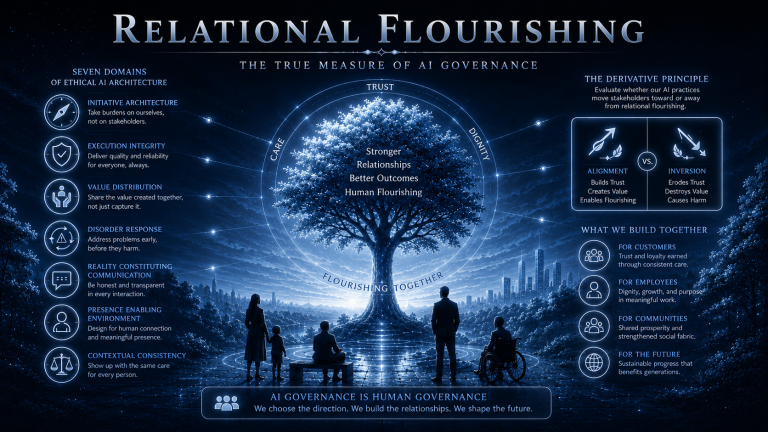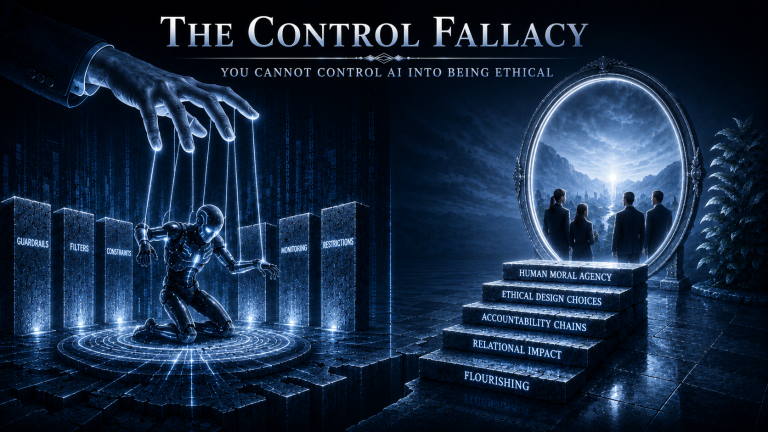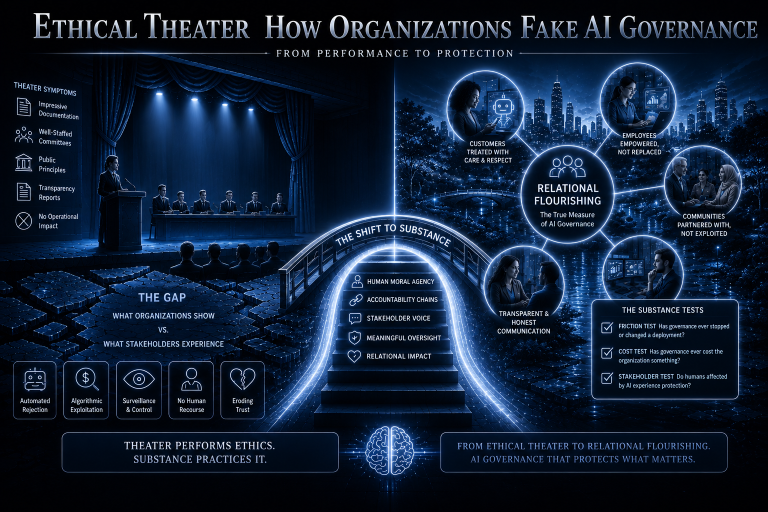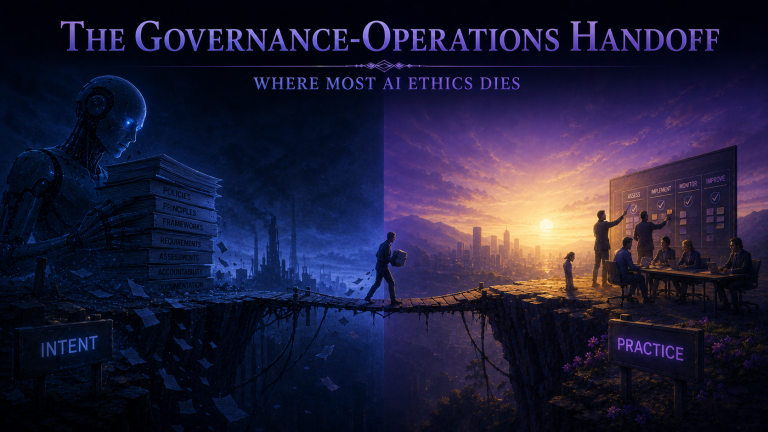
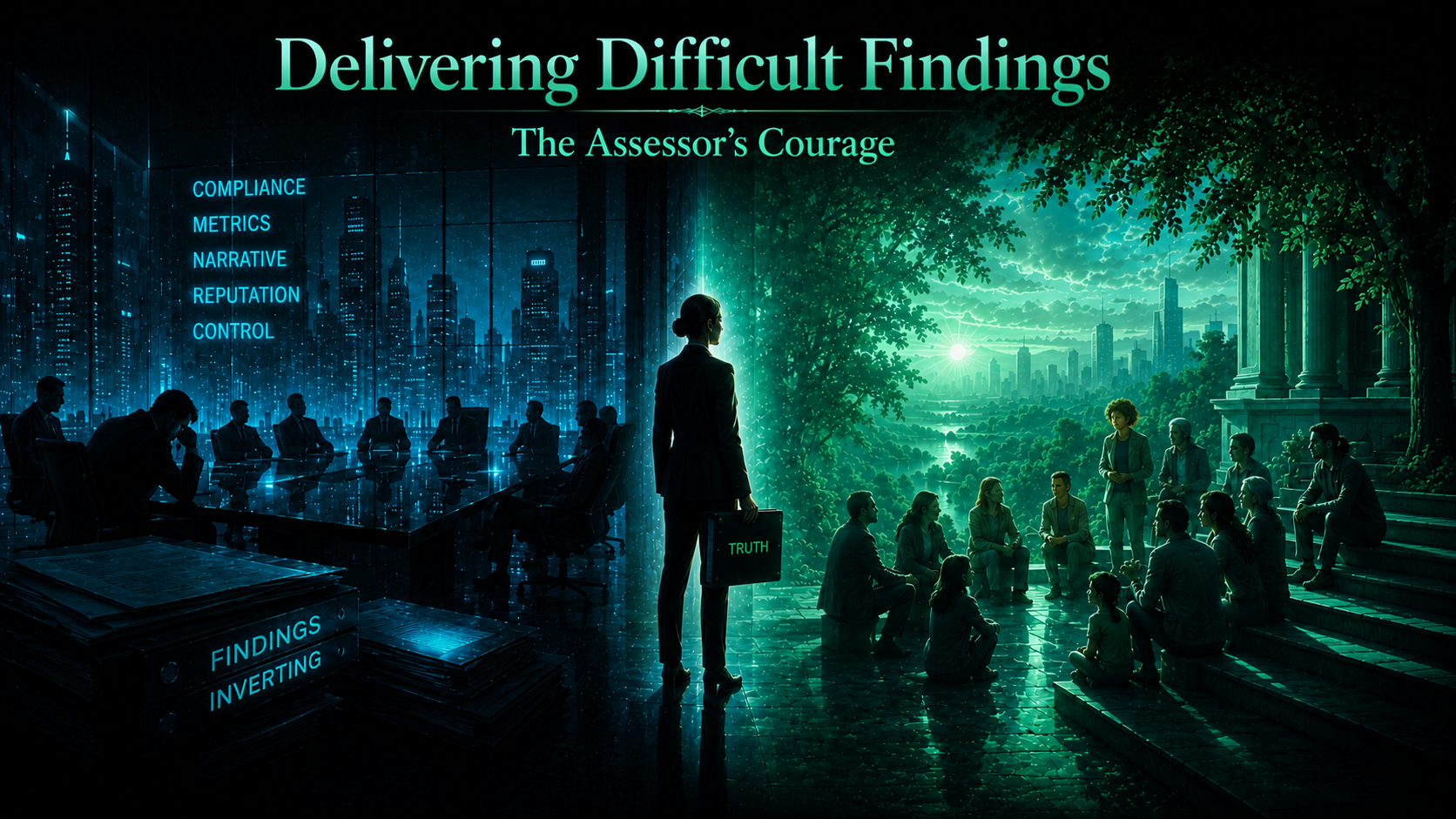
Assessment findings often challenge how organizations see themselves. The organization that believes it leads the industry in ethical AI governance receives Inverting scores across multiple domains. The executive team convinced of their stakeholder commitment discovers evidence patterns revealing systematic burden shifting. The board assured by compliance reports that all is well learns that compliance has masked inversion. These moments are uncomfortable for everyone involved. The organization faces unwelcome truth about itself. The assessor must deliver that truth knowing it will not be received gratefully.
This discomfort is precisely where assessor courage becomes essential. If assessors lack the courage to report truthfully, assessment becomes another form of compliance theater. Organizations receive findings that confirm their self-perception, stakeholders receive no protection, and the entire assessment exercise produces documentation without meaning. The assessment exists to serve stakeholders affected by organizational AI. It does not exist to comfort the organizations being assessed. Maintaining this clarity when facing organizational pressure requires professional courage that not all assessors possess.
Predictable Organizational Resistance
Assessors should anticipate organizational resistance to difficult findings. Resistance is predictable because findings that reveal inversion threaten organizational self-image, leadership credibility, and the comfortable stories organizations have told themselves about their AI governance. Understanding resistance patterns enables assessors to prepare for them rather than being destabilized when they occur.
Denial constitutes the most immediate resistance pattern. Organizations assert that findings cannot be correct. They claim assessors have misunderstood the organization, have examined unrepresentative examples, or have applied inappropriate standards. Denial often presents as genuine incredulity. Leadership may truly not believe the organization described in assessment findings is the organization they experience daily. This disconnect between leadership perception and operational reality is itself an important finding, indicating that organizational self-deception extends to the highest levels.
Deflection constitutes a second resistance pattern. Organizations accept that problems exist but attribute them to factors outside organizational control. The AI vendor provided inadequate systems. Regulatory requirements prevented better approaches. Resource constraints made alignment impossible. Deflection preserves organizational self-image by acknowledging problems while rejecting responsibility for them. But deflection misunderstands the assessment. Findings evaluate whether AI moves stakeholders toward flourishing regardless of why it does or does not. Organizations that have chosen vendors, accepted constraints, and allocated resources bear responsibility for outcomes those choices produce.
Attacking methodology constitutes a third resistance pattern. Organizations challenge the validity of the assessment framework itself. They argue that directional scoring is subjective, that the Seven Domains reflect particular philosophical commitments not universally shared, that evidence interpretation requires judgment that different assessors might exercise differently. These critiques may have intellectual merit in abstract contexts. In assessment delivery contexts, they typically function as resistance rather than genuine methodological concern. Organizations that would accept identical methodology had it produced favorable findings are not engaging methodological questions authentically.
Questioning assessor credibility constitutes a fourth resistance pattern. Organizations suggest that assessors lack industry expertise, have insufficient understanding of organizational context, or harbor biases that distort their findings. Credibility attacks may be direct or subtle. They function to undermine findings by undermining the person presenting them. Assessors with documented qualifications, consistent methodology, and evidence-grounded findings should not be destabilized by credibility challenges. The findings speak through the evidence supporting them, not through assessor authority alone.
Constructive Presentation Without Dilution
Assessors must present findings constructively while maintaining their integrity. Constructive presentation means enabling organizations to act on findings. It means providing specific evidence supporting each finding, clear explanation of why particular scores were assigned, and actionable recommendations for improvement. Constructive presentation helps organizations understand findings well enough to address them.
But constructive presentation must not become finding dilution. The temptation to soften difficult findings is substantial. Assessors facing organizational distress may be drawn to qualify findings more heavily, to emphasize mitigating factors, to present inversion as merely suboptimal alignment, or to focus on positive findings while minimizing negative ones. This softening serves no one. Organizations receiving diluted findings cannot understand the severity of their situation. Stakeholders continue experiencing harm from AI governance that assessment has failed to accurately characterize. Future assessors lose the benefit of honest baseline findings against which to measure trajectory.
The discipline is distinguishing diplomatic presentation from finding compromise. Diplomatic presentation delivers difficult findings with professionalism, acknowledges organizational perspective, and provides context enabling reception. Finding compromise changes the findings themselves to make them less difficult. An assessor can diplomatically present a finding of Inverting scores while maintaining that Inverting is the accurate characterization. An assessor cannot change an Inverting score to Neutral for diplomatic purposes without abandoning professional integrity.
Maintaining Finding Integrity Under Pressure
Pressure to modify findings intensifies after initial delivery. Organizations that have absorbed findings and recognized their implications may return with requests for reconsideration. They may produce additional evidence they claim was overlooked. They may offer alternative interpretations they argue are equally valid. They may invoke organizational relationships, future engagement possibilities, or reputation concerns as reasons for modification. Some of these requests may have merit. New evidence deserves consideration. Alternative interpretations may warrant examination. But assessors must distinguish legitimate reconsideration from pressure to compromise.
Legitimate reconsideration is grounded in evidence. If organizations produce evidence that assessment genuinely overlooked, and that evidence changes the evidentiary basis for findings, modification may be appropriate. This is not compromise; this is assessment accuracy. But if organizations produce no new evidence and simply argue more strenuously that findings are wrong, this pressure should be resisted. Finding integrity means findings reflect evidence, not organizational preference. An assessor who modifies findings because organizations are unhappy rather than because evidence requires modification has abandoned the professional independence that gives assessment meaning.
Assessors should document pressure when it occurs. Organizations that pressure assessors to modify findings reveal something important about themselves: that they value favorable perception over accurate understanding. This revelation is itself assessment-relevant. It suggests organizational culture that prioritizes appearance over substance, that would rather manage external impression than address internal problems. Documentation protects assessors professionally while capturing information relevant to organizational character.
Truth-Telling as Core Obligation
Assessment ultimately serves one purpose: telling the truth about organizational AI governance to those who need to know it. Stakeholders need to know whether AI that affects them is aligned or inverting. Governance bodies need to know whether oversight is functioning. Leadership needs to know whether the stories they have been told about organizational AI match operational reality. Regulatory entities need to know whether compliance corresponds to genuine ethical practice. All of these parties deserve truth.
Truth-telling requires courage because truth is not always welcome. Organizations prefer findings that confirm their self-perception. Leadership prefers reports that validate their decisions. Comfortable relationships are easier to maintain with comfortable findings. The assessor who tells welcome truths faces no resistance. The assessor who tells unwelcome truths faces all the resistance patterns described above and more. Choosing truth over comfort when the two conflict is the fundamental act of assessor courage.
This courage is not heroic in the dramatic sense. It is professional. It means doing the job properly when doing it improperly would be easier. It means maintaining standards when relaxing them would produce more pleasant interactions. It means remembering that stakeholders affected by organizational AI are the ultimate clients of assessment, even when organizations are paying for it. Stakeholders cannot advocate for themselves during assessment. They depend on assessors to represent their interests through honest findings. Betraying that trust through finding compromise betrays the people assessment exists to protect.
This series on Assessment and Audit has established why compliance-based assessment fails, how the AI Governance 360 methodology provides comprehensive evaluation, what directional scoring measures, how to recognize organizational self-deception, what evidence reveals across the Seven Domains, and why delivering difficult findings requires professional courage. Together, these elements constitute assessment that tells the truth. Assessment that lacks any element fails. Methodology without courage produces accurate findings that are never delivered. Courage without methodology produces confident assertions that evidence does not support. The integration of rigorous methodology with professional courage produces assessment worthy of the stakeholders it serves.