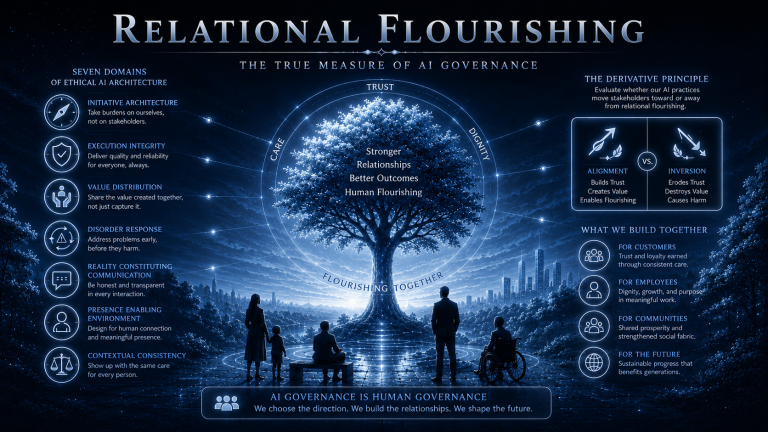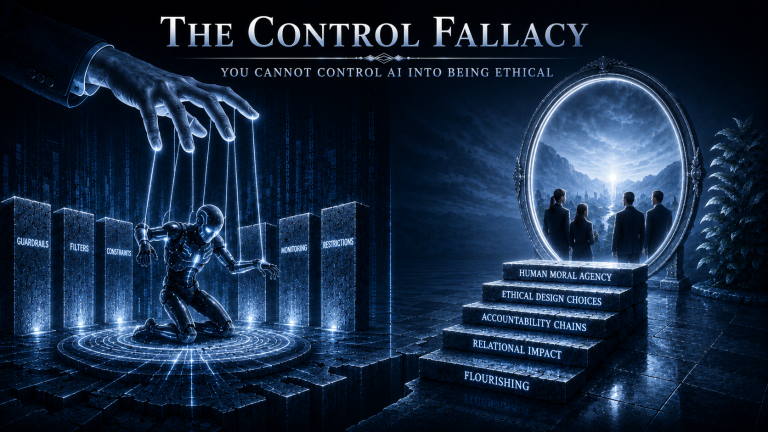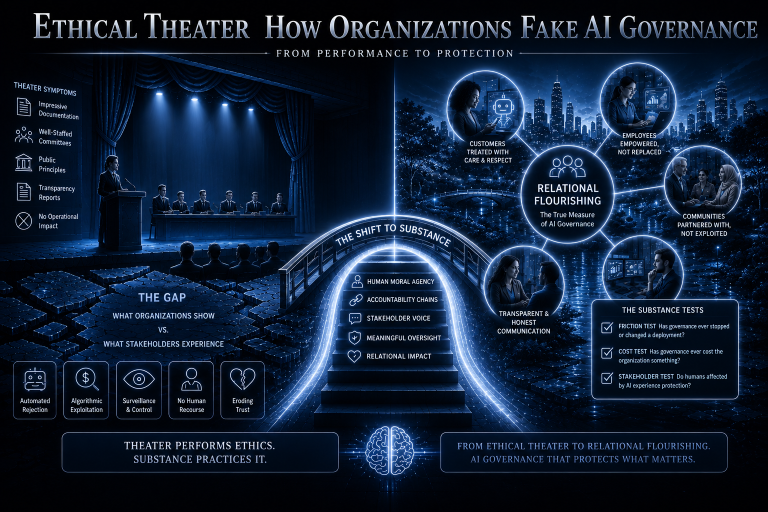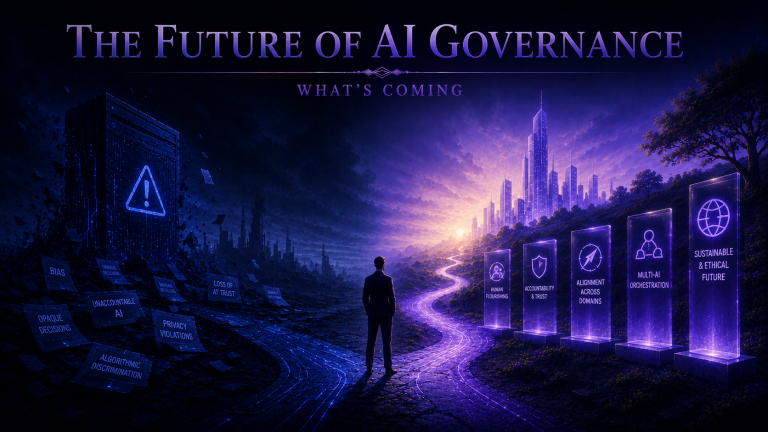
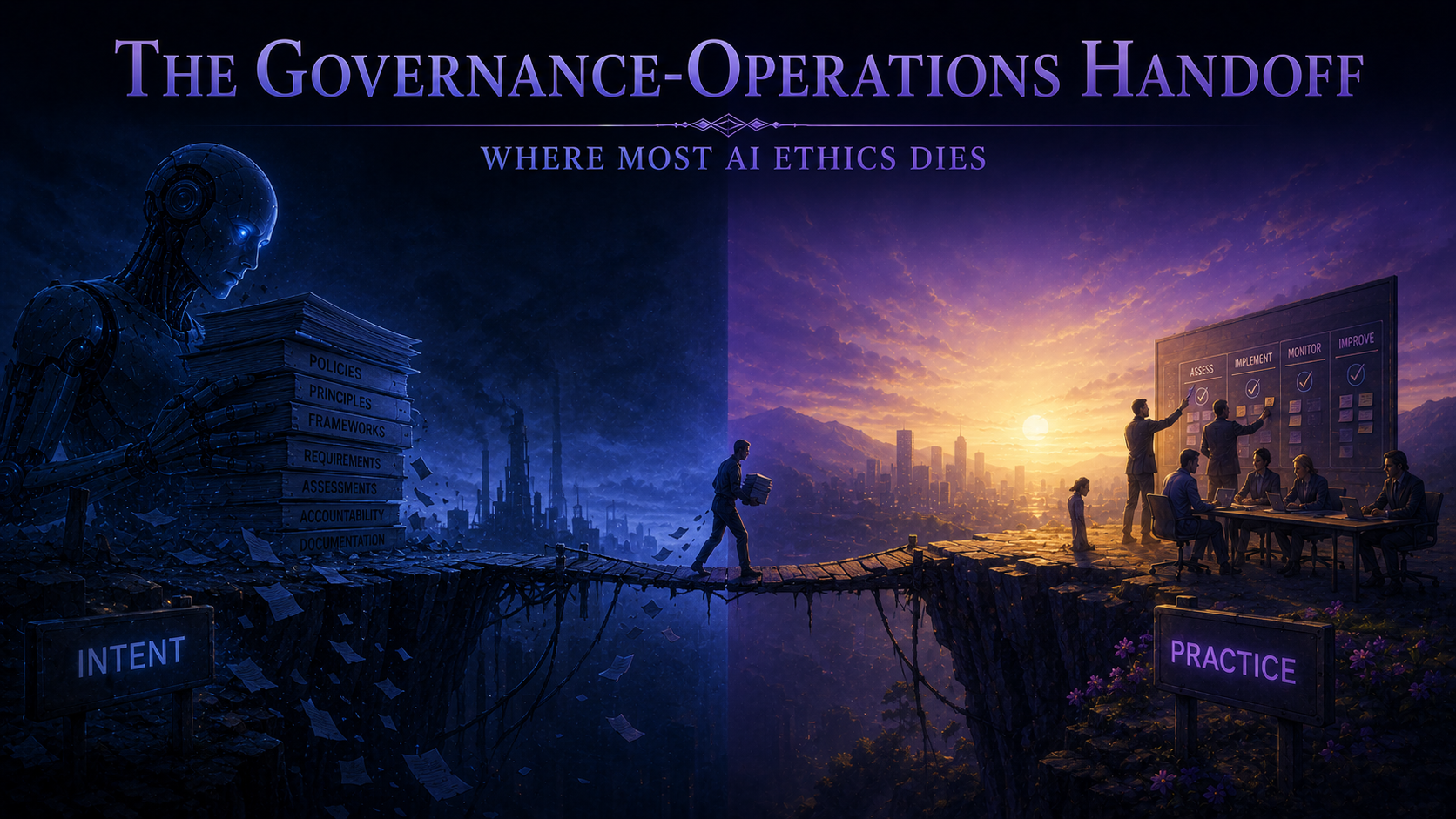
Organizations create governance frameworks with care and sophistication. They articulate principles, establish assessment requirements, document accountability structures, and develop policies addressing deployment across the Seven Domains. Then they hand these frameworks to operations teams for implementation. What happens next determines whether governance becomes practice or merely documentation that lives in policy repositories no one consults. In most organizations, it becomes documentation. The gap between governance intent and operational reality is where AI ethics most commonly dies, not through opposition or deliberate rejection, but through the gradual erosion of governance requirements as they encounter the relentless pressure of operational reality and competing priorities.
This framework has distinguished three professional functions: governance officers who create frameworks and accountability structures, management regulators who operationalize governance in daily practice, and assurance auditors who assess whether governance achieves its objectives. The handoff between governance and operations, between those who create frameworks and those who must implement them in the real world, is the critical juncture where ethical intention either becomes ethical practice or dissipates into the governance theater this series has critiqued throughout.
How the Gap Opens
The governance-operations gap does not open through malice or deliberate subversion. Operations teams rarely reject governance requirements explicitly or announce their intention to ignore them. Instead, the gap opens through accumulated pressure and pragmatic compromise that seems reasonable in each individual instance. Deployment deadlines create pressure to complete assessments quickly, which means completing them less thoroughly. Performance targets create pressure to favor efficiency over the thoroughness governance requires. Resource constraints create pressure to do governance with fewer people than governance genuinely requires to be effective. Each individual compromise seems reasonable given the circumstances; collectively, they hollow out governance substance while maintaining governance form.
The gap widens when governance develops frameworks without operational input or understanding. Governance teams working in isolation may create requirements that are theoretically sound but practically unworkable given operational realities. They may require assessments that operations cannot complete with available resources and timelines. They may establish timelines that deployment realities cannot accommodate no matter how committed operations teams are. Operations teams facing impossible requirements learn to satisfy them formally while substantively cutting corners that governance never intended to authorize. This pattern, formal compliance with substantive circumvention, defines governance theater.
The gap also widens when operations inherits frameworks without understanding their purpose or the reasoning behind requirements. Operations teams receiving governance requirements as mandates from elsewhere may implement them mechanically without grasping what the requirements are designed to achieve. They satisfy the letter of requirements while missing their spirit entirely. Assessments become checkbox exercises completed to satisfy auditors. Accountability becomes documentation filed rather than genuine responsibility embraced. The forms of governance exist while the substance has completely evaporated, leaving only theater.
Bridging the Gap
Closing the governance-operations gap requires deliberate effort throughout framework development and implementation. Organizations that successfully bridge this gap share common practices that other organizations would do well to study and emulate in their own governance journeys.
Collaborative development ensures governance frameworks are both principled and implementable in the real world. Operations teams should participate in framework development, not to water down requirements but to ensure requirements can actually be satisfied operationally given realistic resource and time constraints. When operations teams understand why requirements exist and how they can be implemented practically, they become partners in governance rather than reluctant recipients of mandates imposed from elsewhere. This collaborative approach requires governance professionals to explain purposes, not just requirements, and operations professionals to engage with purposes, not just compliance burdens.
Translation protocols convert governance frameworks into operational procedures people can actually follow. Governance frameworks necessarily operate at a level of abstraction; they establish principles and requirements applicable across contexts and situations. Operations requires specificity: exactly what must be done, by whom, when, documented how, reviewed by whom, and approved through what process. Translation protocols bridge this gap, converting abstract requirements into concrete procedures operations teams can follow consistently. Good translation preserves governance intent while providing operational clarity. Poor translation either loses governance substance in operationalization or remains too abstract for practical implementation.
Ongoing dialogue maintains alignment as conditions change over time. Initial alignment between governance and operations erodes naturally as technologies evolve, business pressures shift, and personnel change roles. Regular dialogue between governance and operations teams identifies emerging gaps before they become unbridgeable chasms. This dialogue should be structured and recurring, not ad hoc and sporadic. Organizations that schedule regular governance-operations synchronization meetings maintain alignment that organizations relying on informal communication gradually lose without realizing what has happened until the damage is done.
Shared metrics create common ground for governance and operations to work from together. Governance tends to measure different things than operations. Operations focuses on deployment velocity, system performance, and resource efficiency. Governance focuses on assessment completion, accountability documentation, and alignment verification. When governance and operations measure different things, they optimize for different outcomes, and the gap widens invisibly. Shared metrics that both functions own create alignment: metrics that capture both operational effectiveness and governance achievement. Developing these shared metrics requires joint effort and often reveals underlying tensions that must be resolved rather than papered over with compromises that satisfy no one.
The Role of Assurance
Assurance auditors provide independent verification that the governance-operations handoff has succeeded. Without assurance, governance assumes what operations has not necessarily achieved. Governance believes its requirements are being implemented faithfully; operations believes its implementations satisfy requirements adequately; no one verifies whether these beliefs are accurate. Assurance closes this verification gap by independently assessing whether operational practices actually achieve governance objectives in practice rather than merely on paper.
Effective assurance requires independence from both governance and operations. Assurance cannot be captured by governance, reporting only what governance wants to hear about its framework’s effectiveness. Assurance cannot be captured by operations, verifying compliance without examining substance. True assurance asks whether the Two Conditions are actually being satisfied in practice: whether accountability chains actually function when tested, whether alignment assessments actually occur and influence decisions, whether governance intent becomes operational reality.
The governance-operations handoff is where ethical AI deployment succeeds or fails operationally. Organizations that bridge this gap effectively transform governance frameworks into lived practice that shapes actual AI behavior. Organizations that fail to bridge it create elaborate documentation while AI deployment proceeds ungoverned in substance if not in form. The difference lies not in framework sophistication but in the deliberate effort to ensure governance requirements become operational reality. As the remaining posts in this series discuss emerging careers and the future of AI governance, they assume organizations have successfully navigated this critical handoff from principle to practice.