A decade ago, AI governance as a profession barely existed. Organizations deployed AI with whatever oversight structures they had, adapting IT governance or compliance frameworks or creating ad hoc approaches that rarely addressed the distinctive challenges AI presents. The professionals working on AI ethics were scattered across academic departments, legal teams, and technical organizations, rarely connecting around shared professional identity or methodology. When organizations wanted AI governance expertise, they often discovered such expertise did not exist in any coherent form.
That era is ending. AI governance is becoming a recognized profession with distinct career paths, specialized knowledge requirements, and emerging certification standards. The professionals who build expertise now will define what this profession becomes. They will establish the methodologies governing AI deployment for decades to come. They will occupy leadership positions when demand for governance expertise far exceeds supply. The ground floor of a profession opens only once, and the window for entering AI governance at this foundational stage will not remain open indefinitely.
This framework has established three distinct professional functions: governance officers who create frameworks and accountability structures, management regulators who operationalize governance in daily practice, and assurance auditors who assess whether governance achieves its objectives. These functions correspond to three emerging career paths, each with distinctive requirements and trajectories.
The Governance Professional Path
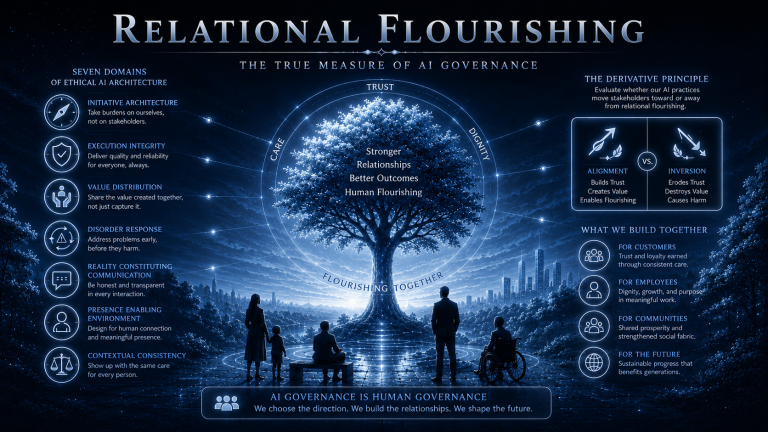
Governance professionals establish the frameworks, policies, and accountability structures guiding organizational AI deployment. They ask foundational questions that others often overlook: How should the organization evaluate whether AI serves human flourishing? What accountability chains must exist before AI can be deployed in roles requiring human judgment? What standards govern each of the Seven Domains? How do we distinguish AI as tool from AI occupying roles, and what governance activates when that distinction matters?
This path suits professionals with backgrounds in policy development, legal analysis, ethics, or compliance. The core competency is translating ethical principles into organizational requirements, creating frameworks that are simultaneously principled and practical, rigorous and implementable. Governance professionals must understand the Derivative Principle deeply enough to operationalize it, grasp why the Two Conditions must both be satisfied, recognize when the Vacancy Problem has occurred, and translate these concepts into policies that operations teams can actually implement.
Career progression typically moves from policy analyst to governance manager to chief governance officer. Entry roles involve drafting policies, supporting governance committees, and conducting framework assessments. Mid-career roles involve leading governance for specific AI categories or domains, managing governance teams, and engaging with executive leadership on governance strategy. Senior roles involve enterprise-wide governance strategy, board-level reporting as discussed in our earlier post on board oversight, and organizational culture shaping as addressed when this series opened with the culture question.
Professionals on this path should develop deep understanding of ethical frameworks beyond mere compliance orientation, strong writing skills for policy development that communicates both requirements and purposes, ability to engage stakeholders at all organizational levels, and courage to advocate for governance positions even when they create friction with deployment pressures.
The Operations Management Path
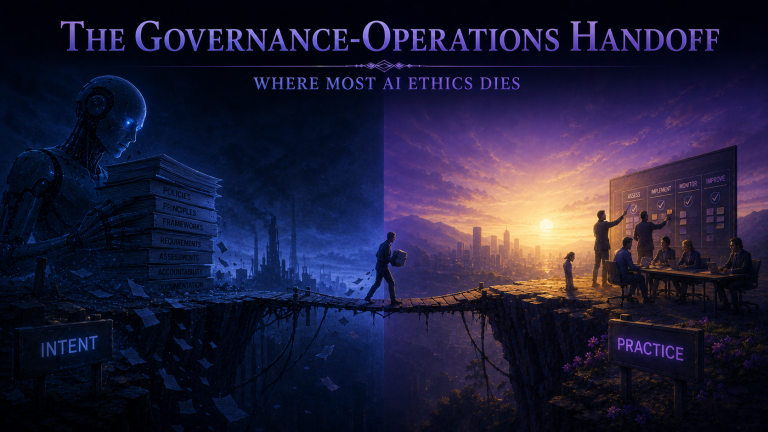
Management regulators implement governance frameworks in daily operational practice. They translate policy requirements into operational procedures, ensure systems operate within governance constraints, monitor for alignment drift over time, and intervene when operations diverge from governance intent. The governance-operations handoff we examined earlier in this series fails without capable operations management. Beautiful frameworks mean nothing if operations cannot or will not implement them.
This path suits professionals with backgrounds in operations management, product management, or technical management. The core competency is translating abstract requirements into concrete procedures, managing systems in ways that serve governance objectives while meeting performance requirements, and balancing deployment pressures against ethical requirements when they conflict. Operations managers must understand governance frameworks well enough to implement their spirit, not just their letter, recognizing when technical compliance misses substantive intent.
Career progression typically moves from implementation specialist to operations manager to director of AI operations. Entry roles involve implementing specific governance requirements for particular AI systems. Mid-career roles involve managing AI deployment teams, establishing operational standards, and ensuring governance requirements are embedded in operational processes. Senior roles involve enterprise-wide AI operations strategy and ensuring operational culture supports governance objectives throughout the organization.
Professionals on this path should develop strong operational management skills, ability to translate between governance and operational languages, technical understanding sufficient to oversee AI system behavior and recognize when systems operate outside intended parameters, and commitment to ethical operation even when cutting corners would be easier or faster.
The Assurance Auditor Path
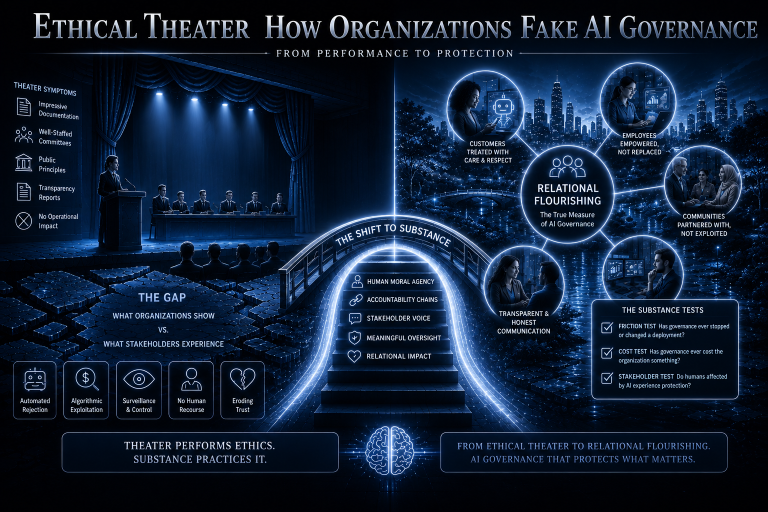
Assurance auditors evaluate whether governance and operations together achieve alignment objectives. They assess whether governance frameworks are followed, whether operational practices serve governance purposes or merely satisfy formal requirements, whether domain assessments reveal alignment or inversion, whether accountability chains actually function. Audit provides independent verification that prevents governance from assuming what operations has not actually achieved. Without rigorous assurance, governance becomes aspiration divorced from reality.
This path suits professionals with backgrounds in audit, risk assessment, quality assurance, or compliance evaluation. The core competency is assessing objectively whether standards are met, identifying gaps between documentation and reality, evaluating whether practices serve purposes or merely satisfy formal requirements. Auditors must distinguish between organizations that have achieved alignment and organizations that have merely documented their intention to achieve it.
Career progression typically moves from AI audit analyst to audit manager to chief AI assurance officer. Entry roles involve conducting assessments, documenting findings, and tracking remediation. Mid-career roles involve designing assessment methodologies, leading audit teams, and engaging with governance leadership on findings. Senior roles involve enterprise-wide assurance strategy, regulatory engagement, and ensuring audit independence from organizational pressures that might compromise objectivity.
Building the Profession
While these paths are distinct, professionals need not remain in a single function throughout their careers. Movement across functions builds valuable perspective that enhances effectiveness in any role. A governance professional who has experienced operations understands what frameworks need to be implementable. An operations manager who has worked in governance understands purposes behind requirements. An auditor who has worked in both understands each function well enough to evaluate their interaction authentically.
Beyond individual career paths, professionals entering AI governance now have opportunity to build the field itself. The methodologies are still emerging. The professional standards are still forming. Professionals who develop new methodologies, who write and speak about challenges, who mentor others will shape what AI governance becomes as a profession. This shaping opportunity is unique to emerging professions and will not persist once the field matures.
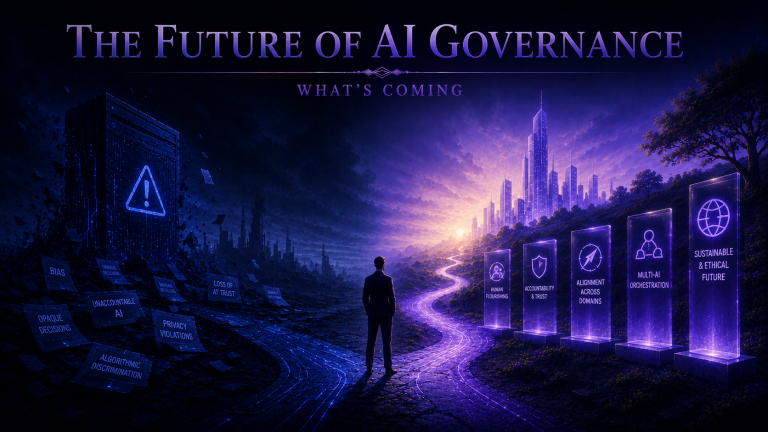
As AI deployment accelerates, demand for AI governance professionals will grow faster than supply. Organizations recognize that ungoverned deployment creates risks they cannot afford. Regulatory pressure, stakeholder expectations, and publicized failures all push organizations toward building governance capacity. Professionals who have built expertise will find their skills in high demand across industries and geographies. The final post in this series examines what the future holds for AI governance, including how intensifying pressures will amplify demand for these professionals and the organizations wise enough to develop them.