Search Blog

Explore what makes IAIM different: rigorous certifications, real-world AI ethics training, and a growing global community committed to responsible AI.

PHASE 5: Assessment and Audit

Delivering Difficult Findings: The Assessor’s Courage

Assessment findings often challenge how organizations see themselves. The organization that believes it leads the industry in ethical AI governance receives Inverting scores across multiple domains. The executive team convinced of their stakeholder commitment discovers evidence patterns revealing systematic burden shifting. The board assured by compliance reports that all is well learns that compliance has
Read More »
PHASE 5: Assessment and Audit

Assessing the Seven Domains: What Evidence Reveals

The Seven Domains of Ethical AI Architecture provide the framework for directional assessment. But frameworks remain abstract without specific evidence indicators showing assessors what to look for. How does an assessor know whether Initiative Architecture is aligned or inverting? What evidence reveals Value Distribution patterns? When does Disorder Response indicate organizational character? This post translates

Read More »
PHASE 5: Assessment and Audit

Recognizing Organizational Self-Deception

Most organizations believe they govern AI ethically. They genuinely believe this. Executive leadership can articulate stakeholder commitment with apparent sincerity. Middle management can point to processes designed with stakeholder interests in mind. Frontline personnel can describe how they try to serve the people their AI affects. And yet, when assessment examines what these organizations actually

Read More »
PHASE 5: Assessment and Audit

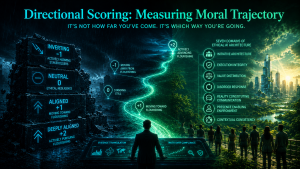
Directional Scoring: Measuring Moral Trajectory

Traditional AI assessment frameworks ask the wrong question. They evaluate organizational maturity, measuring how sophisticated an organization’s AI capabilities and governance structures have become. A Level 1 organization has basic awareness. A Level 5 organization has achieved optimization. Progress is assumed: more capability equals higher scores. But this maturity orientation contains a fundamental error. It

Read More »
PHASE 5: Assessment and Audit

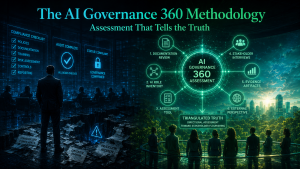
The AI Governance 360 Methodology: Assessment That Tells the Truth

Most organizations believe they govern AI ethically. They point to policies, cite compliance records, and reference the absence of scandal as evidence of their alignment. When assessment relies solely on organizational self-report, these beliefs remain unchallenged. Documents are produced. Interviews proceed according to comfortable scripts. Everyone agrees that governance is functioning. But beneath this polished

Read More »
PHASE 5: Assessment and Audit

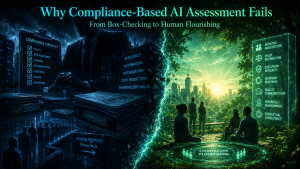
Why Compliance-Based AI Assessment Fails

Organizations have developed a comfortable ritual around AI assessment. Auditors arrive with their checklists, documentation is produced from filing cabinets, interviews proceed according to rehearsed scripts, and at the end of the process everyone agrees that governance is functioning adequately. The organization has policies. It follows regulations. It can point to industry practices it has

Read More »
Scroll to Top
0