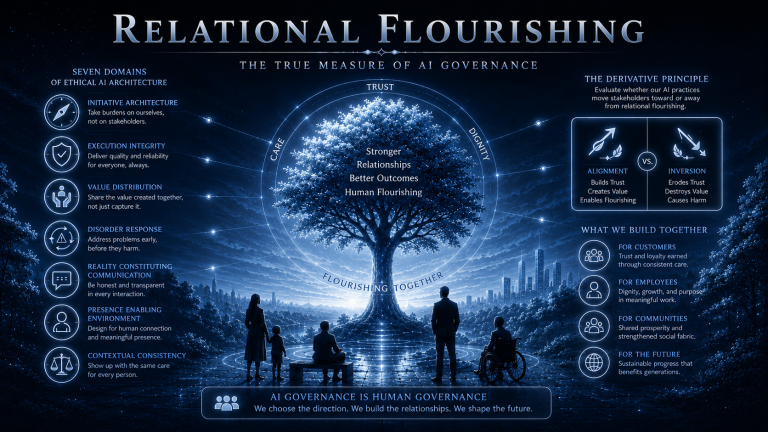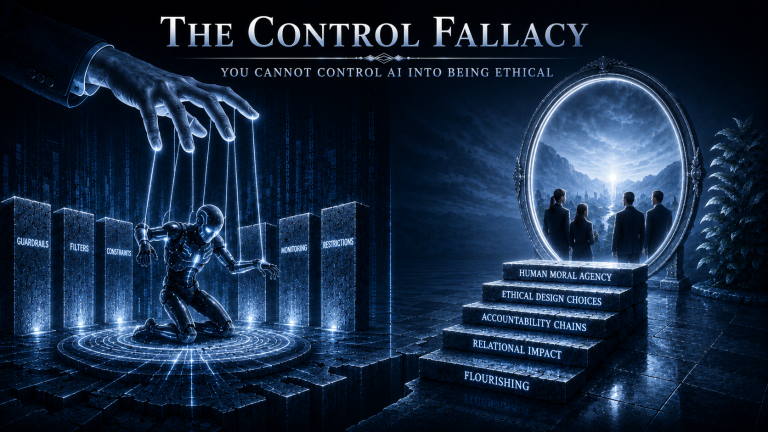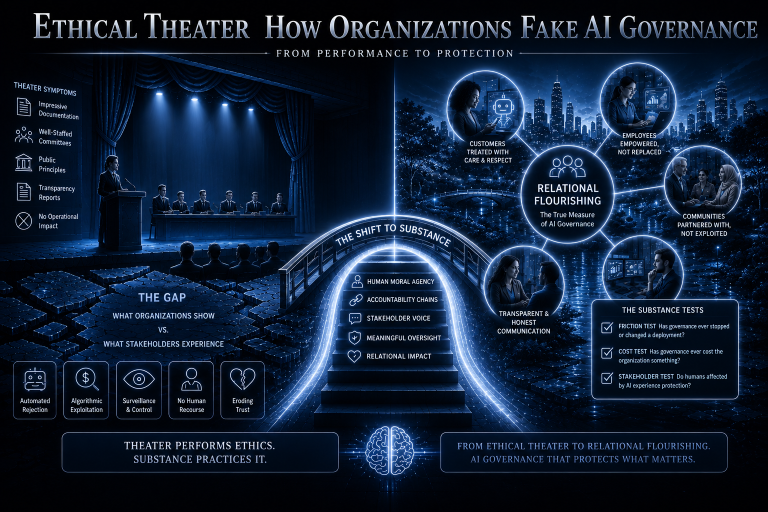
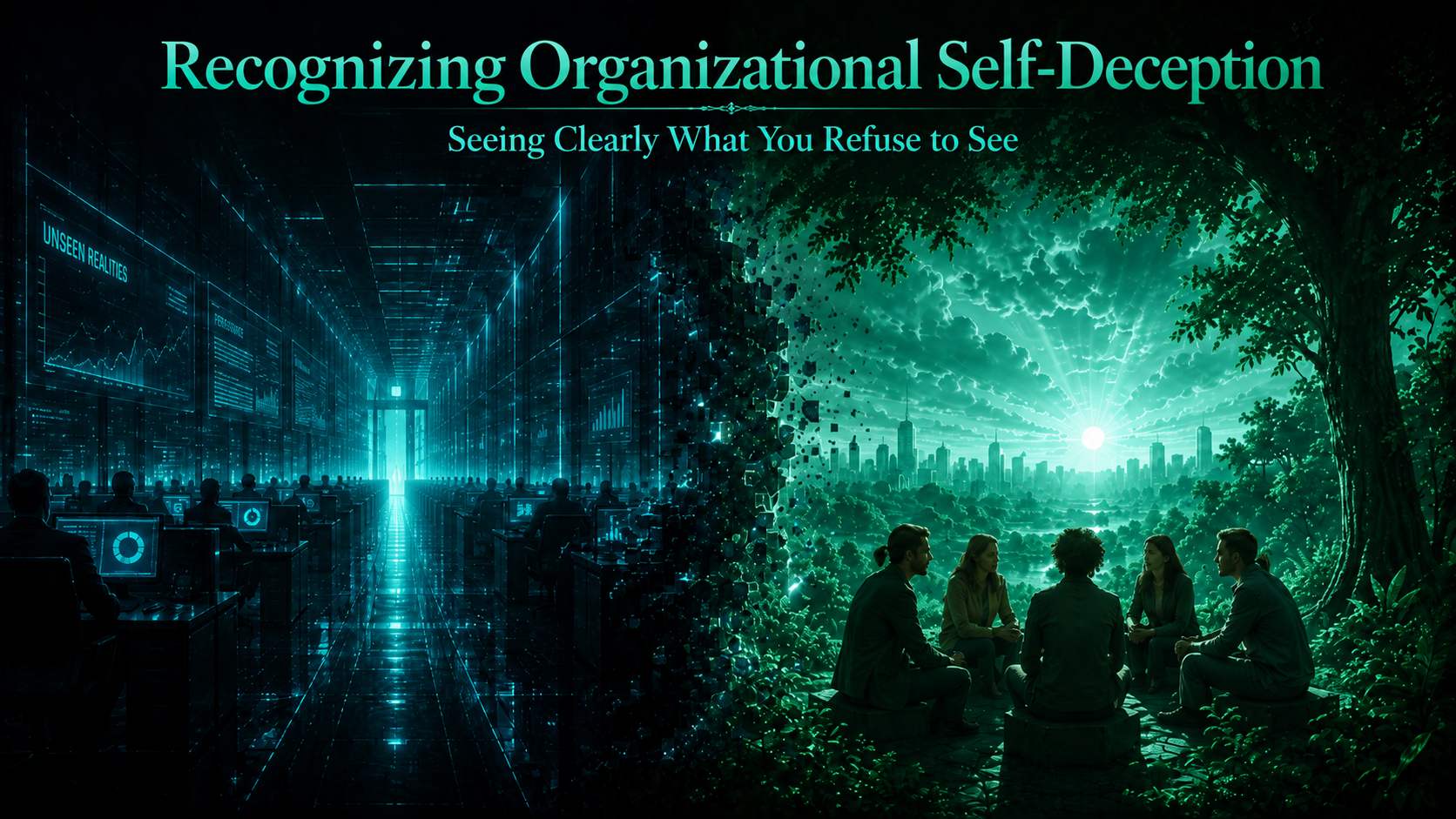
Most organizations believe they govern AI ethically. They genuinely believe this. Executive leadership can articulate stakeholder commitment with apparent sincerity. Middle management can point to processes designed with stakeholder interests in mind. Frontline personnel can describe how they try to serve the people their AI affects. And yet, when assessment examines what these organizations actually do, the gap between belief and reality often proves vast. This is not hypocrisy. Hypocrites know they are deceiving others. This is self-deception. Organizations have successfully deceived themselves about the moral character of their AI governance.
Understanding organizational self-deception is essential for assessors because self-deception shapes everything organizations present during assessment. Documents reflect what organizations believe about themselves. Interview responses emerge from the stories organizations tell themselves. Even evidence artifacts can be interpreted through the lens of organizational belief. Assessors who accept organizational self-presentation at face value will confirm that self-deception rather than penetrate it. They will complete assessments that validate comfortable organizational narratives while stakeholders continue experiencing the harm those narratives obscure.
The Mechanics of Organizational Self-Deception
Organizational self-deception operates through several reinforcing mechanisms. The first is selective attention. Organizations focus on evidence supporting their preferred self-image while filtering evidence that would challenge it. Positive customer feedback receives visibility. Complaints route to back offices where they disappear. Success stories circulate through organizational communication. Failure patterns remain unanalyzed. Over time, the organization genuinely does not see the contradictory evidence because it has built systems that prevent such evidence from reaching awareness.
The second mechanism is rationalization language. Organizations develop vocabulary that makes harmful practices sound reasonable, even virtuous. Shifting burden onto customers becomes customer empowerment or self-service convenience. Eliminating human touchpoints becomes digital transformation. Capturing all AI-generated value while stakeholders receive nothing becomes operational efficiency. Surveillance becomes customer insight or workforce optimization. These terms are not intentional deception; organizational members genuinely understand their work through this vocabulary. They describe burden shifting as empowerment because that is how they have learned to see it. The language shapes perception, making inversion invisible to those practicing it.
The third mechanism is reference point selection. Organizations compare themselves to peers rather than to ethical standards. If competitors have similar practices, those practices seem normal regardless of their moral character. An organization that shifts burden onto stakeholders no more than industry average considers itself reasonable. An organization that extracts value no more aggressively than competitors considers itself ethical. But peer comparison cannot establish ethical achievement. An industry that collectively practices inversion contains no aligned reference point. Normal does not mean right. Industry standard does not mean aligned.
The fourth mechanism is outcome attribution. Organizations attribute positive outcomes to their practices while attributing negative outcomes to external factors beyond their control. When customers successfully navigate AI systems, the organization credits its effective design. When customers fail, the organization blames customer inadequacy or environmental circumstances. This asymmetric attribution protects organizational self-image from disconfirming evidence. Every success validates the organization’s self-perception. No failure challenges it.
Self-Deception Patterns in Assessment
Assessors must recognize specific patterns indicating organizational self-deception. Documents created for appearance rather than operation represent one such pattern. These documents look impressive. They contain comprehensive policies, detailed procedures, and thorough standards. But examination reveals that they bear little relationship to operational practice. Personnel do not know these documents exist. Processes described in documentation never actually occur. The documents were created to satisfy compliance requirements or to present favorable impressions, not to govern actual behavior. When documentation and practice diverge systematically, documentation reflects organizational aspiration or self-presentation while practice reveals organizational reality.
Rehearsed interview responses that do not match artifacts represent another pattern. Organizations anticipating assessment prepare personnel to give appropriate answers. These answers are consistent across interviews because they reflect organizational coaching rather than individual experience. But when interview responses are tested against evidence artifacts, discrepancies emerge. Personnel describe stakeholder-centric processes while artifacts reveal stakeholder complaints ignored for months. Personnel explain rapid incident response while logs show response times measured in weeks. Personnel claim burden reduction while metrics show customer effort increasing. Rehearsed responses indicate organizations have developed stories about themselves that they want assessors to believe. Whether those stories correspond to reality requires independent verification.
Metrics measuring organizational convenience rather than stakeholder experience represent a third pattern. Self-deceived organizations develop metrics that make them look good. They measure ticket closure rates rather than problem resolution. They track call handling time rather than customer satisfaction. They monitor process completion rather than outcome quality. These metrics optimize organizational efficiency while remaining silent about stakeholder impact. An organization can achieve excellent scores on convenience metrics while stakeholders experience deteriorating service. When metrics systematically avoid measuring what stakeholders actually experience, the metrics serve organizational self-deception rather than genuine performance understanding.
Rationalization language that makes inversion sound reasonable represents a fourth pattern. Assessors must listen carefully to how organizations describe their practices. When burden shifting becomes empowerment language, when value extraction becomes efficiency language, when surveillance becomes insight language, these translations reveal self-deception in operation. The vocabulary enables organizations to discuss harmful practices as though they were beneficial. Assessors should translate organizational vocabulary back into plain description and observe organizational reactions. Organizations practicing conscious strategy can acknowledge plain descriptions. Organizations engaged in self-deception often cannot recognize their own practices when described plainly because the rationalization language has become how they actually understand what they do.
Professional Skepticism as Assessment Discipline
Penetrating organizational self-deception requires professional skepticism as a fundamental assessment discipline. Professional skepticism does not mean assuming organizations are lying. It means recognizing that organizations may genuinely believe assertions that evidence will not support. It means testing every assertion against independent evidence rather than accepting organizational claims at face value. It means listening for patterns that indicate self-deception rather than interpreting all organizational presentation charitably.
The discipline of professional skepticism requires assessors to seek disconfirming evidence actively. When organizations claim stakeholder commitment, assessors should look for evidence of stakeholder harm. When organizations describe rapid response, assessors should examine actual response times. When organizations explain alignment, assessors should search for inversion indicators. This approach is not hostile; it is thorough. Organizations genuinely practicing alignment will survive skeptical examination because their claims will prove accurate. Organizations engaged in self-deception will not survive because skeptical examination will reveal the gap between belief and reality.
Professional skepticism also requires assessors to trust stakeholder voice over organizational narrative. When stakeholders describe experiences that contradict organizational claims, stakeholder experience should be believed. Stakeholders have no incentive to fabricate negative experiences. Organizations have substantial incentive to maintain favorable self-perception. The asymmetry of incentives means stakeholder reports deserve more credence than organizational assertions when the two conflict. Organizations may genuinely believe they provide excellent service while stakeholders experience frustration. The stakeholder experience is what matters for directional assessment.
Compassionate Honesty in Findings
Recognizing self-deception enables honest findings. Assessors who understand how organizations have deceived themselves can present findings that name that deception clearly. This is not cruelty; it is compassion. Organizations cannot correct what they cannot see. Self-deception that remains unrecognized will continue producing harm. Findings that penetrate self-deception provide organizations with the clarity necessary for genuine improvement.
As we will explore in subsequent posts, delivering these findings requires courage. Organizations invested in their self-deception will resist findings that challenge it. They will question methodology, dispute evidence, and sometimes attack assessor credibility. This resistance is predictable. It does not make the findings wrong. The next post examines how assessors evaluate the Seven Domains through specific evidence indicators. The final post addresses how to deliver difficult findings with the clarity and courage that stakeholder protection demands. The foundation for both is understanding that most organizations have not seen themselves clearly, and assessment exists to provide the mirror they have avoided.