The Inevitability of Ethical Failure
AI ethical failures will occur. This is not pessimism. It is operational realism. Systems operating at scale across diverse contexts will inevitably produce outcomes that harm stakeholders in ways that governance frameworks were designed to prevent. Models will make biased predictions affecting vulnerable populations. Automation will execute consequential decisions without appropriate human review. Communication systems will deceive stakeholders despite disclosure requirements. Efficiency optimizations will shift burdens onto stakeholders despite Initiative Architecture commitments. The question is not whether ethical failures will happen but how organizations respond when they do.
Conventional incident response focuses on technical remediation. Identify the bug. Fix the code. Deploy the patch. Resume operations. This approach proves wholly inadequate for ethical failures. A technical fix that prevents recurrence does nothing for stakeholders already harmed. A code deployment that addresses the proximate trigger ignores systemic factors that enabled the failure. A rapid return to operations that satisfies business continuity requirements may compound relational damage if stakeholders perceive the organization as prioritizing efficiency over their wellbeing.
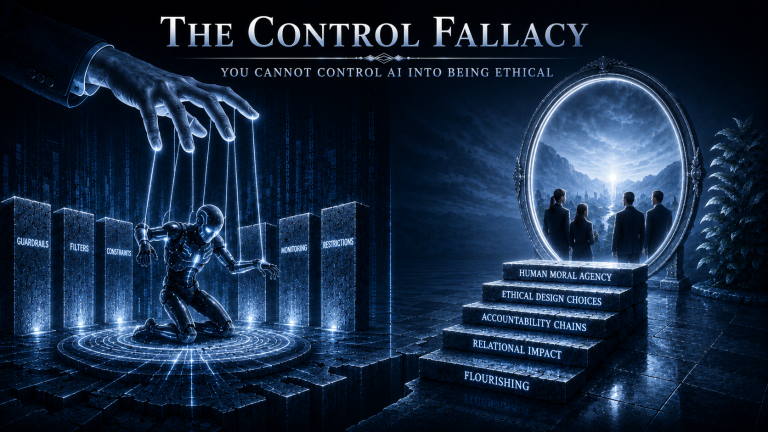
Ethical incident response must extend beyond technical remediation to encompass stakeholder restoration and systemic improvement. It must recognize that ethical failures damage relationships, not merely operations. It must prioritize affected humans over organizational reputation. And it must treat each incident as information about governance adequacy, not merely as operational anomaly to be corrected and forgotten.
Rapid Identification: Recognizing Ethical Failures as Ethical Failures
The first challenge in ethical incident response is recognition. Technical monitoring systems detect technical failures. Performance dashboards reveal efficiency degradation. But ethical failures often manifest in ways that standard monitoring misses or misclassifies.
A bias pattern affecting a specific demographic may not appear in aggregate accuracy metrics. A systematic burden shift may improve efficiency indicators while degrading stakeholder experience. A disclosure failure may produce no operational signals at all until complaints emerge. Ethical failures can hide in data that looks healthy by conventional standards.
Organizations must train personnel to recognize ethical failures as ethical failures, not merely as customer complaints, operational variances, or edge cases. When stakeholders report that AI treated them unfairly, that is not a service issue. It is a potential ethical failure requiring ethical response. When monitoring reveals that certain populations experience systematically different outcomes, that is not statistical noise. It is a potential bias pattern requiring ethical investigation. When feedback themes suggest stakeholders feel deceived, manipulated, or disregarded, those themes signal potential failures across multiple domains that governance exists to protect.
Recognition also requires honest assessment of whether incidents are isolated or systemic. Organizations prefer to classify failures as one-time anomalies because anomalies require less response than patterns. But ethical failures rarely occur in isolation. The bias that affected one stakeholder likely affected others. The burden shift visible in one interaction likely operated across many interactions. The disclosure failure that one stakeholder noticed likely deceived many who did not notice. Ethical incident response must investigate scope honestly, even when honest investigation reveals problems larger than organizations want to acknowledge.
Stakeholder-Centered Response
Once an ethical failure is identified, response must center on affected stakeholders rather than organizational damage control. Conventional response asks: How do we fix this? How do we prevent recurrence? How do we limit reputational damage? Stakeholder-centered response asks first: Who was harmed? How were they harmed? What do they need?
Identification of affected stakeholders requires honest scope assessment. Ethical failures that reach complaint status typically represent a fraction of total impact. Most stakeholders harmed by AI bias, burden shifts, or deception never report the harm. Response must proactively identify affected populations, not merely address the stakeholders who complained loudly enough to trigger incident recognition.
Understanding harm requires stakeholder engagement. Organizations cannot determine what affected stakeholders need by internal deliberation. They must ask. This means genuine outreach to affected populations, honest acknowledgment that harm occurred, and authentic inquiry into what restoration would look like from stakeholder perspective.
Prioritizing stakeholders over reputation means accepting that appropriate response may generate unfavorable attention. Acknowledging harm publicly may invite criticism. Compensating affected stakeholders may create precedent. Stakeholder-centered response accepts these costs as necessary for genuine ethical practice. Organizations that optimize response for reputation management rather than stakeholder restoration reveal that their governance commitments are conditional on reputational convenience.
Genuine Remediation and Root Cause Analysis
Stakeholder-centered response requires genuine remediation that makes affected parties whole, not merely apology that acknowledges harm without addressing it. What genuine remediation looks like depends on the nature of harm. Financial harm may require compensation. Access denial may require alternative provision. Relational damage may require sustained commitment to different treatment. Bias harm may require both individual remediation and systemic change that prevents recurrence.
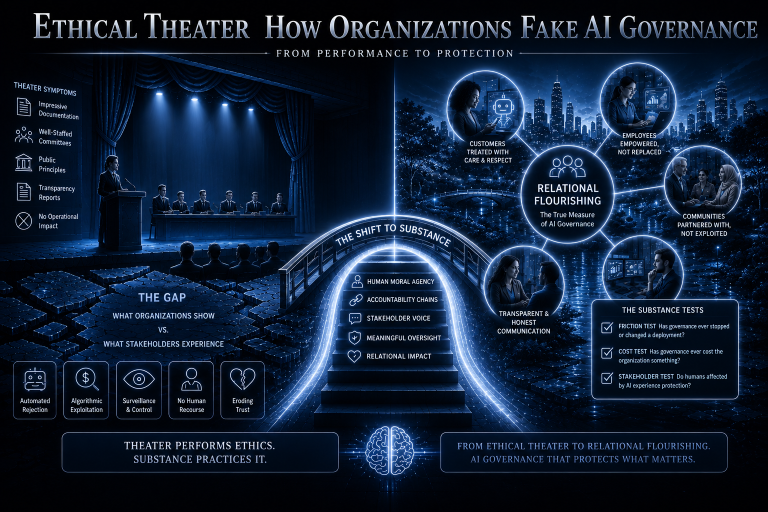
Genuine remediation differs from performative remediation in accountability acceptance. Performative remediation expresses regret while minimizing organizational responsibility. Genuine remediation acknowledges that organizational choices created harm and accepts obligation to address that harm. The difference appears in how remediation is communicated, what resources are committed, and whether affected stakeholders experience restoration or merely experience being managed.
Root cause analysis must examine systemic factors, not merely proximate triggers. The proximate cause of bias may be a training data imbalance. The systemic cause may be a development process that did not require bias testing, a governance framework that did not specify bias standards, or an organizational culture that did not prioritize equity. Addressing only proximate causes ensures recurrence through different mechanisms. Systemic improvement requires examining why governance failed to prevent the failure that occurred.
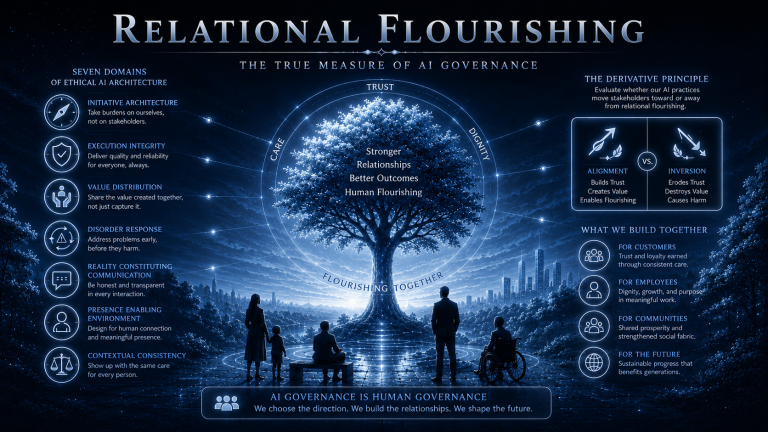
The Seven Domains provide structure for root cause investigation. Did the failure reflect Initiative Architecture inversion, prioritizing organizational efficiency over stakeholder needs? Execution Integrity failure, doing what should not have been done or failing to do what should have been? Value Distribution capture, extracting value while externalizing harm? Disorder Response neglect, allowing problems to compound? Reality Constituting Communication deception? Presence Enabling Environment degradation? Contextual Consistency fragmentation? Understanding which domains failed guides systemic improvement efforts.
Systemic Improvement and Organizational Learning
Ethical incidents are information. They reveal where governance frameworks are inadequate, where operational practices diverge from governance intent, where monitoring fails to detect problems, and where organizational culture permits ethical erosion. Organizations that treat incidents as anomalies to be corrected and forgotten waste this information. Organizations that treat incidents as learning opportunities improve governance continuously.
Systemic improvement following incidents should address governance framework gaps. Did the failure reveal standards that were inadequate, unclear, or absent? Did governance review processes fail to identify risks that manifested in the incident? Did governance metrics fail to detect problems before they produced harm? Each incident should generate governance framework enhancements that reduce probability of similar failures.
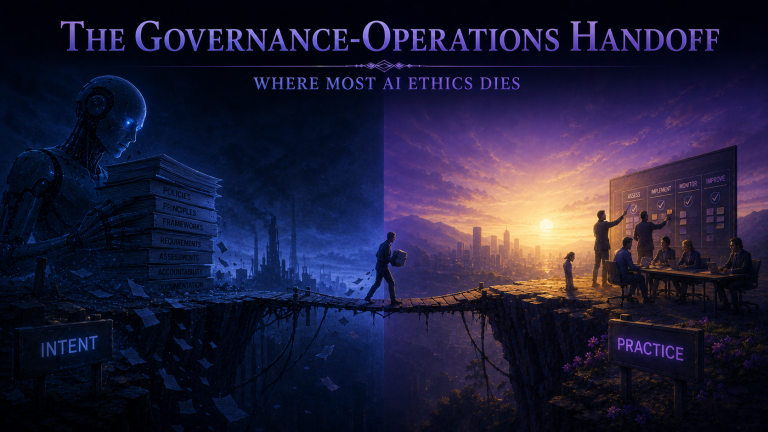
Improvement should also address operational implementation. Even when governance frameworks were adequate, operational practice may have diverged. The incident reveals where that divergence occurred. Addressing divergence requires not merely correcting the specific practice but strengthening mechanisms that keep operations aligned with governance intent. This connects to our earlier post on the drift problem: incidents often reveal drift that monitoring failed to detect.
Finally, improvement should address organizational culture. Ethical failures rarely emerge from cultures that genuinely prioritize stakeholder flourishing. They emerge from cultures that prioritize efficiency, that tolerate small compromises, that discount stakeholder voice, that resist bad news. Incident response that does not examine cultural factors addresses symptoms while leaving disease intact. Our final post in this series will explore how pressure and compromise shape organizational culture. Incident response provides natural moments to assess whether culture enables or undermines ethical practice.
Most incident response optimizes for rapid return to normal operations. Ethical incident response recognizes that normal operations produced the failure. The goal is not returning to normal but improving toward operations that serve stakeholder flourishing more effectively than the operations that existed before the incident occurred.