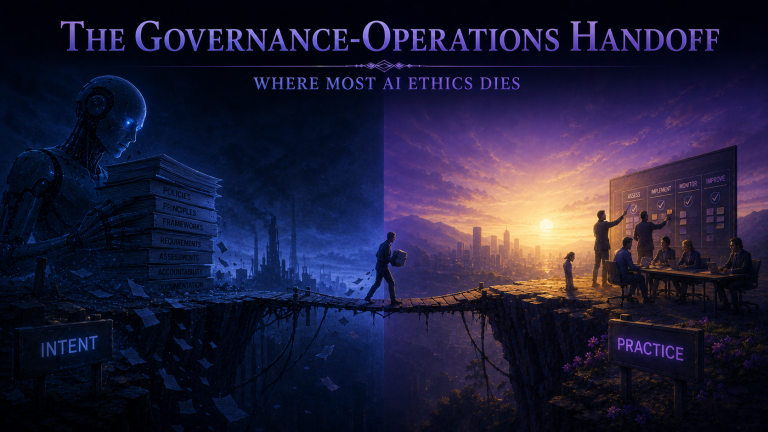
Organizations invest substantial resources in AI governance frameworks, policies, procedures, and technical controls. They create committees, hire specialists, and develop elaborate documentation specifying how AI deployment should be assessed and managed. Yet many discover that these investments produce disappointing results. The frameworks exist, but AI deployment continues to create ethical problems. The policies are documented, but decisions on the ground ignore them. The procedures are specified, but operational reality diverges from procedural intent in ways both subtle and significant. Understanding why requires examining something that governance frameworks cannot create but desperately depend upon: organizational culture.
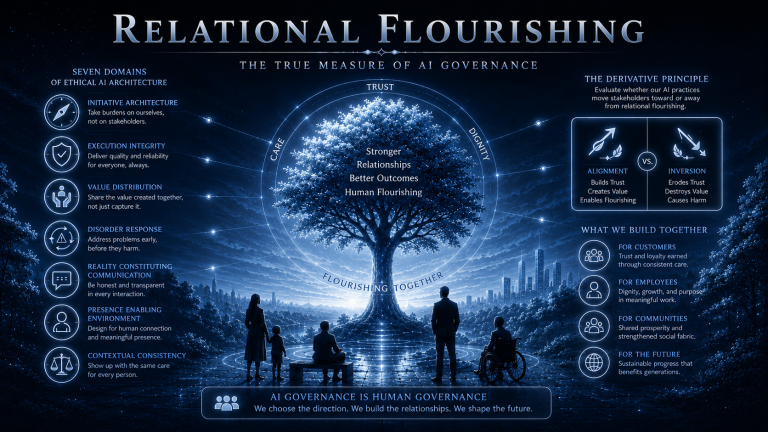
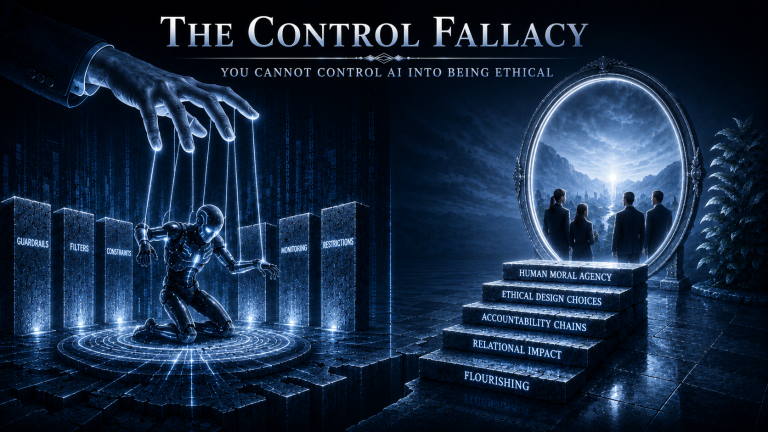
This series has established that AI governance evaluates how humans exercise moral agency through AI systems. The framework activates when AI occupies roles requiring human judgment, creating what we have termed the Vacancy Problem. The Two Conditions, structural accountability and directional alignment, must both be satisfied before deployment proceeds. The Seven Domains provide assessment structure across organizational functions. But all of these elements operate within a cultural context that either enables or undermines them. Governance frameworks do not operate in a vacuum; they operate within cultures that determine whether frameworks become living practice or merely documented aspiration that everyone ignores when convenient.
Why Culture Determines Governance Effectiveness
Governance frameworks specify what should happen. Culture determines what actually happens when no one is watching, when deadlines press, when competing priorities conflict, when cutting corners would be easy and unlikely to be detected. In organizations with strong ethical cultures, governance frameworks receive genuine engagement because people believe in their purpose and understand why the requirements matter. In organizations with weak ethical cultures, governance frameworks become obstacles to circumvent, boxes to check, theater to perform for auditors and regulators while actual practice follows different rules entirely.
Consider how this plays out in practice. An AI system is proposed for deployment. Governance requires assessment across the Seven Domains before approval. In a strong ethical culture, the assessment team examines each domain seriously, asking hard questions about whether deployment will move toward or away from human flourishing. They flag concerns, even when flagging concerns creates delays and discomfort. They escalate issues even when escalation risks political capital. The governance framework functions as intended because people believe in its purpose and act accordingly even when doing so is difficult.
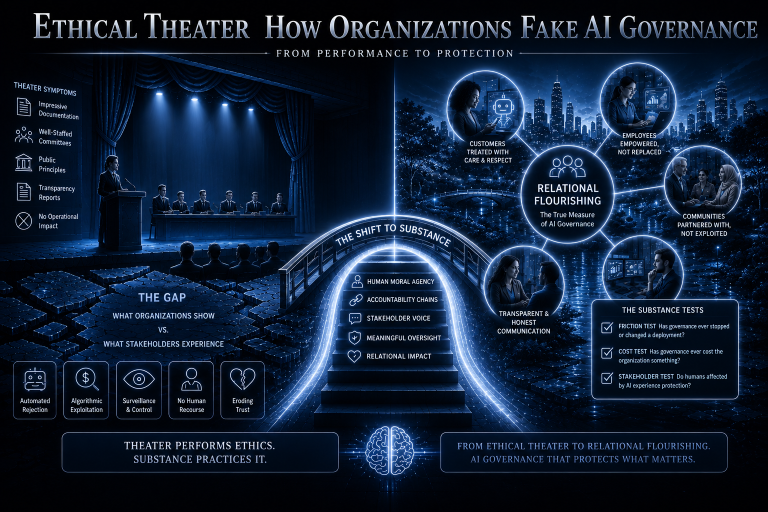
In a weak ethical culture, the same assessment becomes a different exercise entirely. The team knows the deployment will happen regardless of what assessment reveals. They understand that raising concerns creates friction and potentially career risk. They complete the assessment documentation to satisfy formal requirements while avoiding questions that might reveal problems requiring attention. The governance framework exists, but its implementation has been hollowed out by a culture that does not actually value what governance is designed to protect. This is the governance theater we have critiqued throughout this series, and culture is its primary enabler.
The Four Pillars of Ethical AI Culture
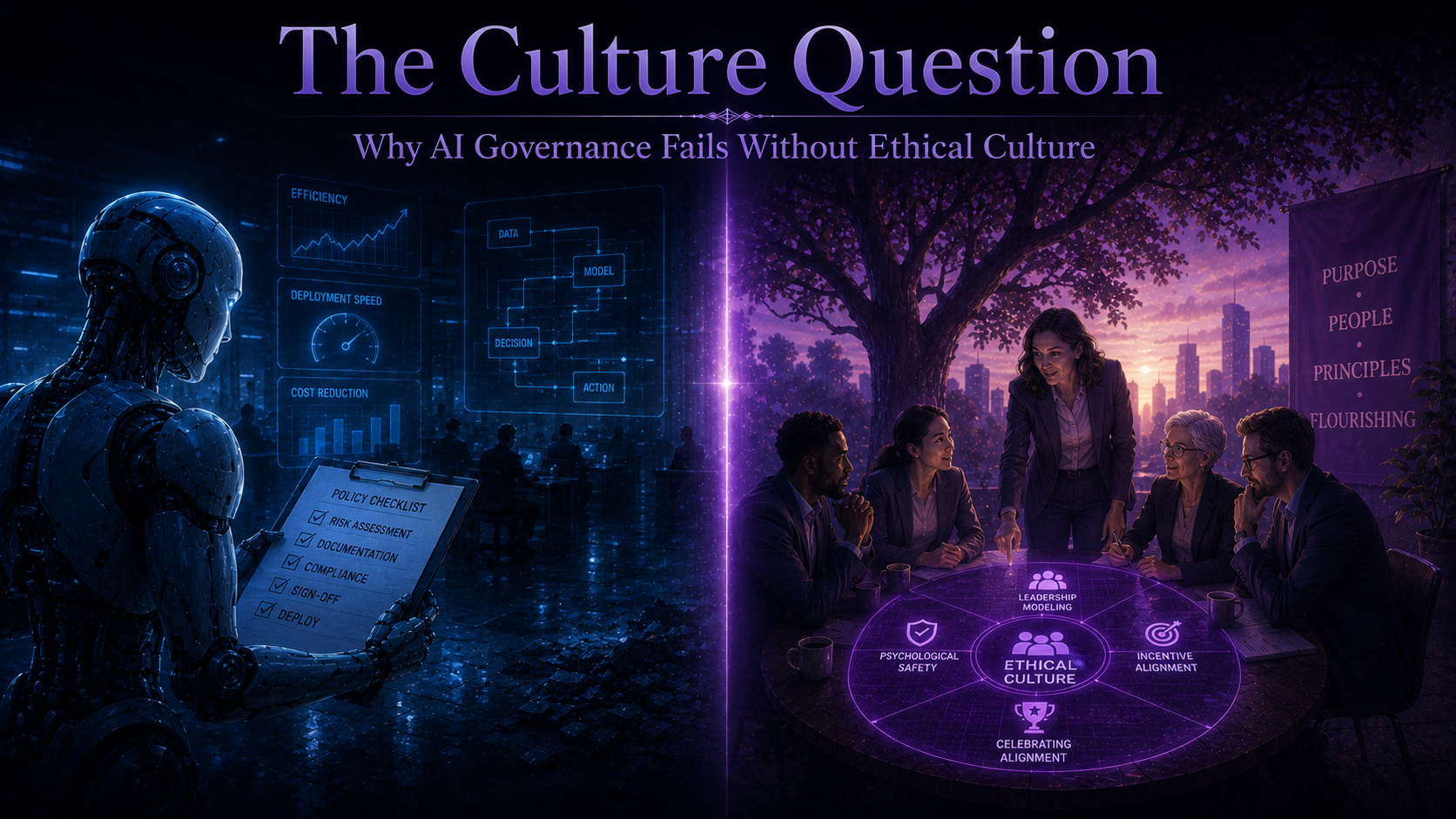
Building culture that supports AI governance requires attention to four interconnected elements. None alone suffices; all must work together to create the cultural foundation governance requires. Organizations that invest in some pillars while neglecting others will find their governance efforts undermined by the weakest element.
Leadership modeling establishes the tone that permeates the organization. When executives visibly prioritize ethical AI deployment, when they ask governance questions in meetings, when they accept delays for governance reasons without complaint, when they celebrate governance successes alongside business successes, they signal that governance matters. Conversely, when leaders focus exclusively on deployment speed, when they express frustration with governance requirements, when they pressure teams to move faster regardless of governance concerns, they signal that governance is theater to be performed but not believed. People throughout the organization observe these signals with precision and calibrate their behavior accordingly. No amount of policy documentation overcomes leadership behavior that contradicts policy intent.
Incentive alignment ensures that doing the right thing is not punished while doing the expedient thing is rewarded. In many organizations, raising governance concerns creates career risk that people learn to avoid. The person who slows a deployment is remembered as an obstacle; the person who enabled rapid deployment is celebrated as effective. Until incentives align with governance objectives, people will rationally choose career advancement over governance compliance, and governance will remain aspirational rather than actual. This means recognition and reward systems must value governance engagement, not just deployment velocity. People who identify problems before deployment should be valued as contributors, not marginalized as obstacles.
Psychological safety enables honest assessment that governance requires. Governance requires people to raise concerns, flag problems, acknowledge uncertainty, and admit when they do not know something important. This only happens when people believe they can speak honestly without retaliation, that admitting ignorance is acceptable, that raising uncomfortable questions is welcomed rather than punished. Creating this safety requires sustained effort over time. It requires leaders who respond to bad news with appreciation rather than anger, who treat concerns as valuable information rather than obstacles to progress, who demonstrate through consistent action that honesty is valued even when honesty is uncomfortable.
Celebrating alignment achievements reinforces the culture organizations need. Organizations routinely celebrate business achievements: revenue milestones, successful launches, efficiency gains. Ethical AI culture requires also celebrating governance achievements: deployments that successfully navigated complex ethical terrain, assessments that identified problems before they caused harm, decisions to delay or cancel deployments that could not satisfy the Two Conditions. These celebrations signal that governance success matters, that ethical deployment is valued, that doing the right thing is worth recognizing publicly even when doing the right thing meant accepting business cost.
Building Culture Takes Time
Culture cannot be implemented like a software system or mandated like a policy. It develops through consistent signals over time, through accumulated experience of how the organization actually operates when pressure mounts and competing priorities conflict. Organizations cannot buy ethical culture or hire it or document it into existence. They can only build it through sustained attention to the signals leadership sends, the incentives systems create, the safety people experience, and the achievements organizations choose to celebrate.
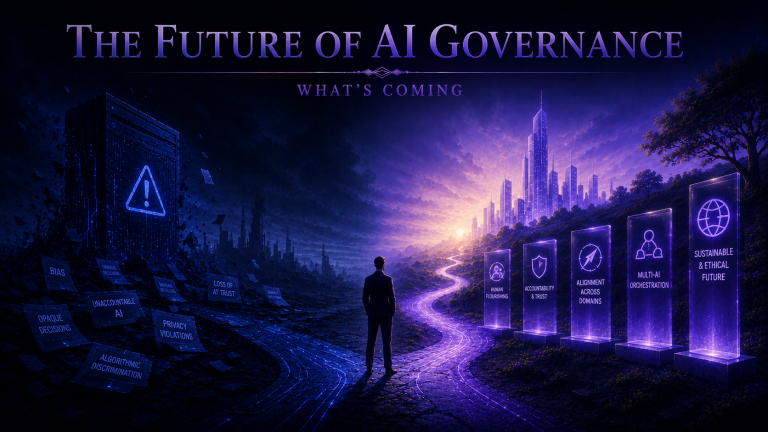
This reality has important implications for AI governance timing. Organizations that wait until AI deployment is urgent to begin building ethical culture will find they cannot build fast enough. The culture required to support governance requires years of consistent investment before it becomes organizational reality. Organizations that begin building culture now, even if their current AI deployment is limited, will have the cultural foundation ready when deployment pressure intensifies. The rest of this series examines how governance operates within organizations, but all of it assumes the cultural foundation described here. Without that foundation, the most sophisticated governance frameworks become merely elaborate documentation of unrealized intentions.