Search Blog

Explore what makes IAIM different: rigorous certifications, real-world AI ethics training, and a growing global community committed to responsible AI.

PHASE 7: Building Ethical AI Organizations

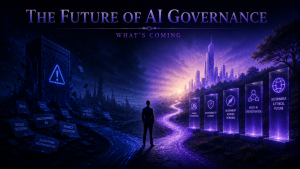
The Future of AI Governance: What’s Coming

Throughout this series, we have explored AI governance as it should be understood and practiced today. We have examined why governance activates when AI occupies roles requiring human judgment rather than when AI merely functions as a tool. We have explored how the Seven Domains provide assessment structure across the full range of organizational functions.
Read More »
PHASE 7: Building Ethical AI Organizations

AI Governance Careers: Paths and Possibilities

A decade ago, AI governance as a profession barely existed. Organizations deployed AI with whatever oversight structures they had, adapting IT governance or compliance frameworks or creating ad hoc approaches that rarely addressed the distinctive challenges AI presents. The professionals working on AI ethics were scattered across academic departments, legal teams, and technical organizations, rarely

Read More »
PHASE 7: Building Ethical AI Organizations

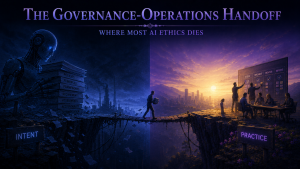
The Governance-Operations Handoff: Where Most AI Ethics Dies

Organizations create governance frameworks with care and sophistication. They articulate principles, establish assessment requirements, document accountability structures, and develop policies addressing deployment across the Seven Domains. Then they hand these frameworks to operations teams for implementation. What happens next determines whether governance becomes practice or merely documentation that lives in policy repositories no one consults.

Read More »
PHASE 7: Building Ethical AI Organizations

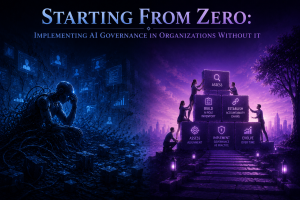
Starting From Zero: Implementing AI Governance in Organizations Without It

Most organizations deploying AI today have little or no formal governance for that deployment. They adopted AI tools incrementally, each deployment seeming minor enough to proceed without special oversight. They treated AI as just another technology requiring the same governance as other software systems. They focused on technical functionality and business outcomes without establishing frameworks

Read More »
PHASE 7: Building Ethical AI Organizations

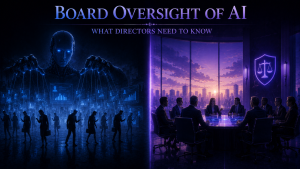
Board Oversight of AI: What Directors Need to Know

Boards of directors bear ultimate accountability for organizational action. This principle, fundamental to corporate governance, does not change when organizations deploy artificial intelligence. If anything, AI deployment intensifies board responsibility because AI systems can scale decisions in ways that human action alone cannot. A flawed human decision affects interactions one at a time; a flawed

Read More »
PHASE 7: Building Ethical AI Organizations

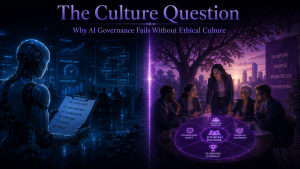
The Culture Question: Why AI Governance Fails Without Ethical Culture

Organizations invest substantial resources in AI governance frameworks, policies, procedures, and technical controls. They create committees, hire specialists, and develop elaborate documentation specifying how AI deployment should be assessed and managed. Yet many discover that these investments produce disappointing results. The frameworks exist, but AI deployment continues to create ethical problems. The policies are documented,

Read More »
Scroll to Top
0