
Author name: Business Tech Ninjas

AI Series

Emotional AI and Synthetic Care: When AI Simulates What It Cannot Provide

The lonely person converses with an AI companion. The grieving individual seeks comfort from a chatbot therapist. The struggling customer encounters a customer service system that expresses empathy and concern. In each case, AI simulates emotional presence that it cannot experience. The question governance must address is what this simulation means for the humans who […]
AI Series

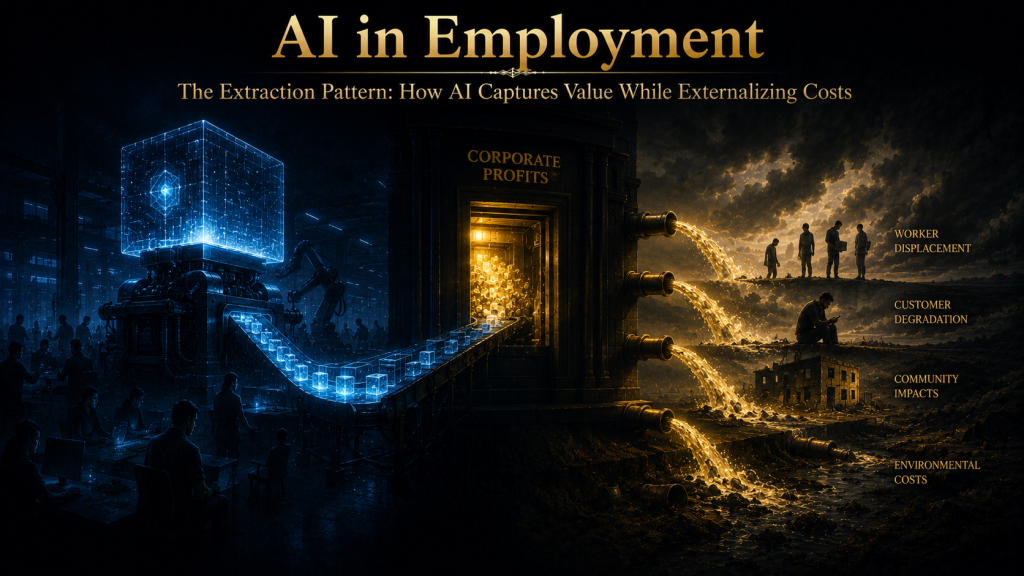
The Extraction Pattern: How AI Captures Value While Externalizing Costs

AI generates enormous value. Efficiency improves. Productivity increases. Capabilities expand. The question that governance must address is deceptively simple: Where does that value flow? The extraction pattern answers this question in ways that should concern anyone committed to ethical AI deployment. Under this pattern, organizations use AI to capture all generated value while externalizing costs

AI Series

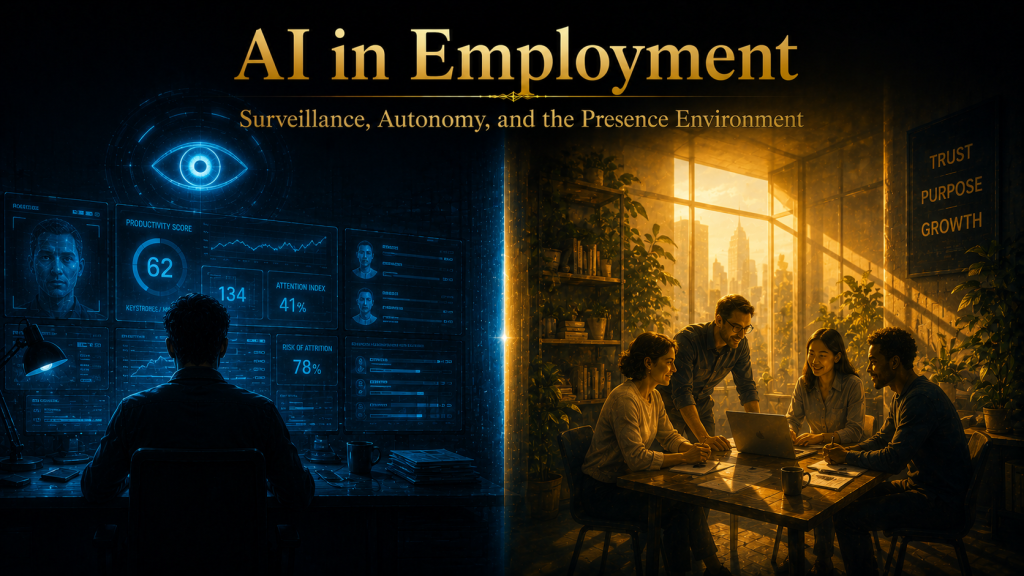
AI in Employment: Surveillance, Autonomy, and the Presence Environment

The employee arrives at work and logs into systems that track every keystroke. Algorithms analyze their communications for sentiment and productivity signals. Performance dashboards quantify their contributions against benchmarks derived from peer comparisons. Predictions about their likelihood of leaving influence how managers interact with them. The workplace has become an AI-shaped environment that surveils, measures,

AI Series

AI in Healthcare: Where Vacancy Becomes Life or Death

The patient arrives frightened. Their symptoms suggest something serious. They have been searching online, reading about possibilities, imagining worst cases. What they need from their healthcare encounter is not merely information processing. They need someone who can perceive their fear, who can judge their unique situation with the experience and wisdom that medical training provides,

AI Series

Delivering Difficult Findings: The Assessor’s Courage

Assessment findings often challenge how organizations see themselves. The organization that believes it leads the industry in ethical AI governance receives Inverting scores across multiple domains. The executive team convinced of their stakeholder commitment discovers evidence patterns revealing systematic burden shifting. The board assured by compliance reports that all is well learns that compliance has

AI Series

Assessing the Seven Domains: What Evidence Reveals

The Seven Domains of Ethical AI Architecture provide the framework for directional assessment. But frameworks remain abstract without specific evidence indicators showing assessors what to look for. How does an assessor know whether Initiative Architecture is aligned or inverting? What evidence reveals Value Distribution patterns? When does Disorder Response indicate organizational character? This post translates

AI Series

Recognizing Organizational Self-Deception

Most organizations believe they govern AI ethically. They genuinely believe this. Executive leadership can articulate stakeholder commitment with apparent sincerity. Middle management can point to processes designed with stakeholder interests in mind. Frontline personnel can describe how they try to serve the people their AI affects. And yet, when assessment examines what these organizations actually

AI Series

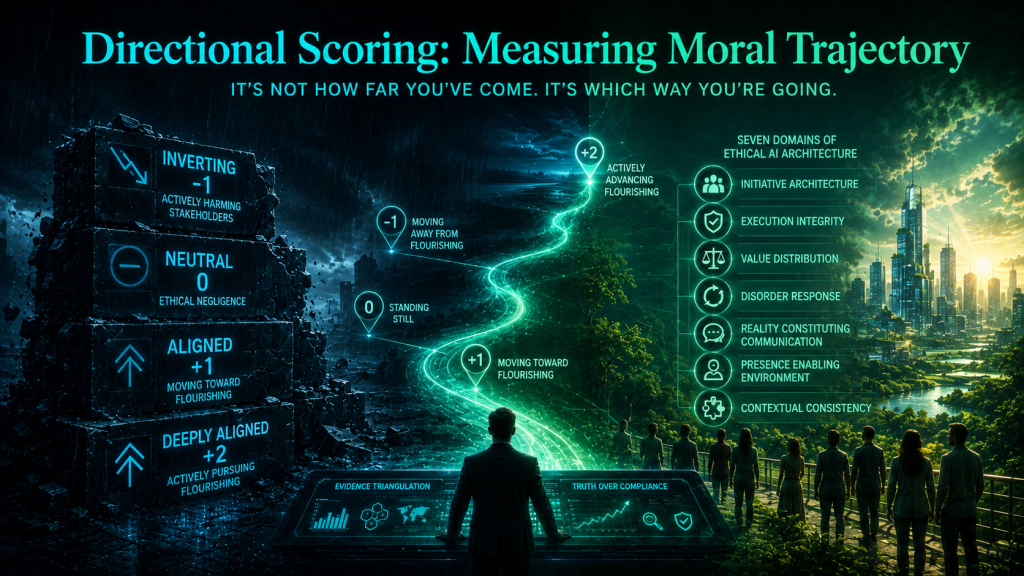
Directional Scoring: Measuring Moral Trajectory

Traditional AI assessment frameworks ask the wrong question. They evaluate organizational maturity, measuring how sophisticated an organization’s AI capabilities and governance structures have become. A Level 1 organization has basic awareness. A Level 5 organization has achieved optimization. Progress is assumed: more capability equals higher scores. But this maturity orientation contains a fundamental error. It

Scroll to Top
0